| Product Features |
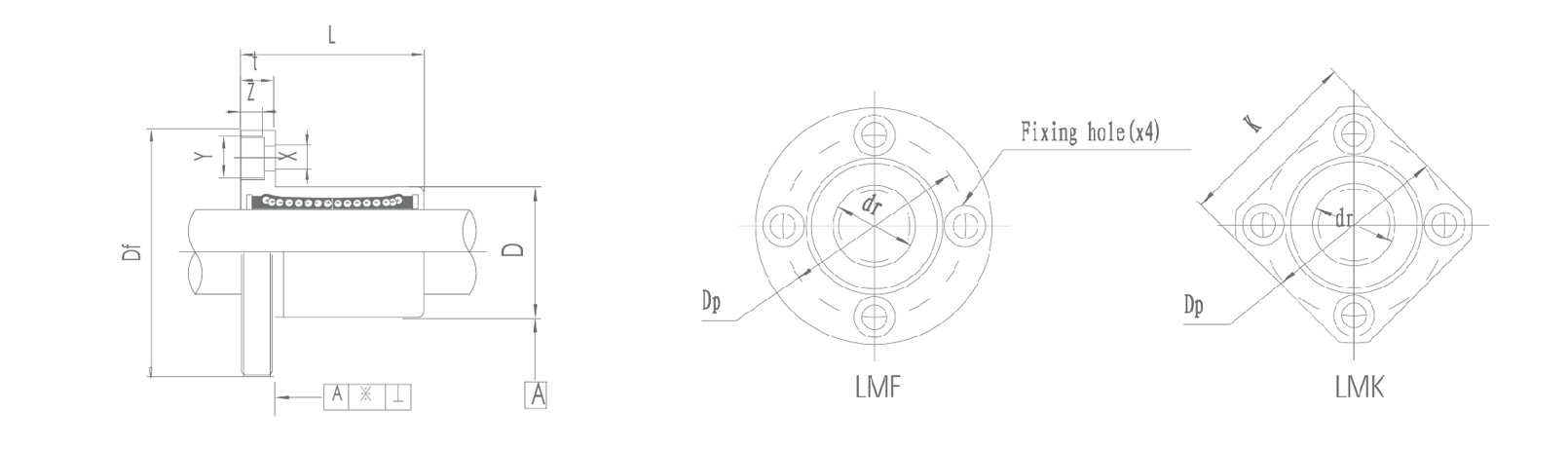
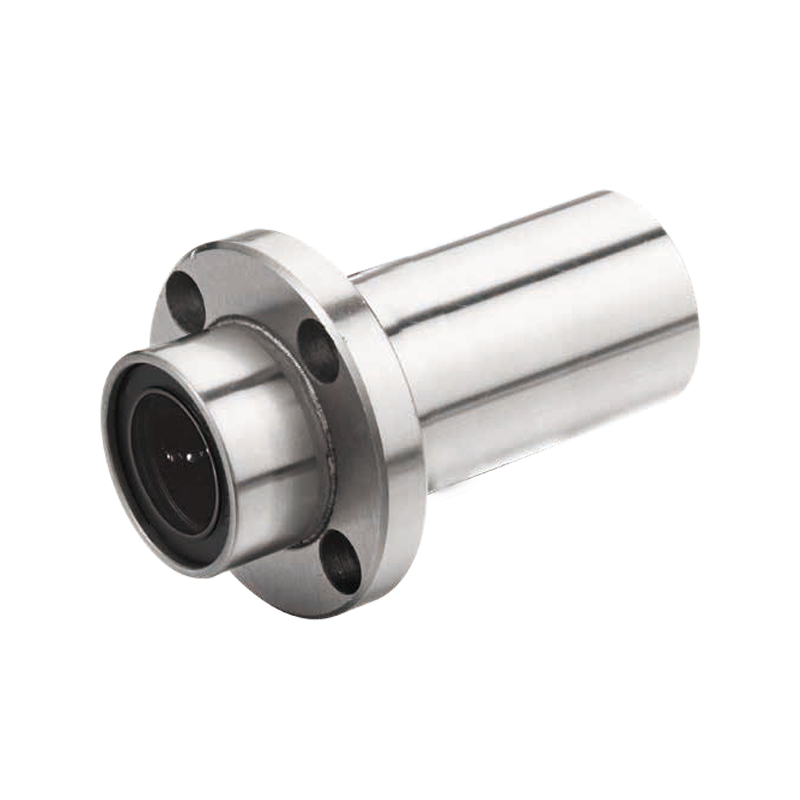
LMF-UU (Standard Round Flange) |
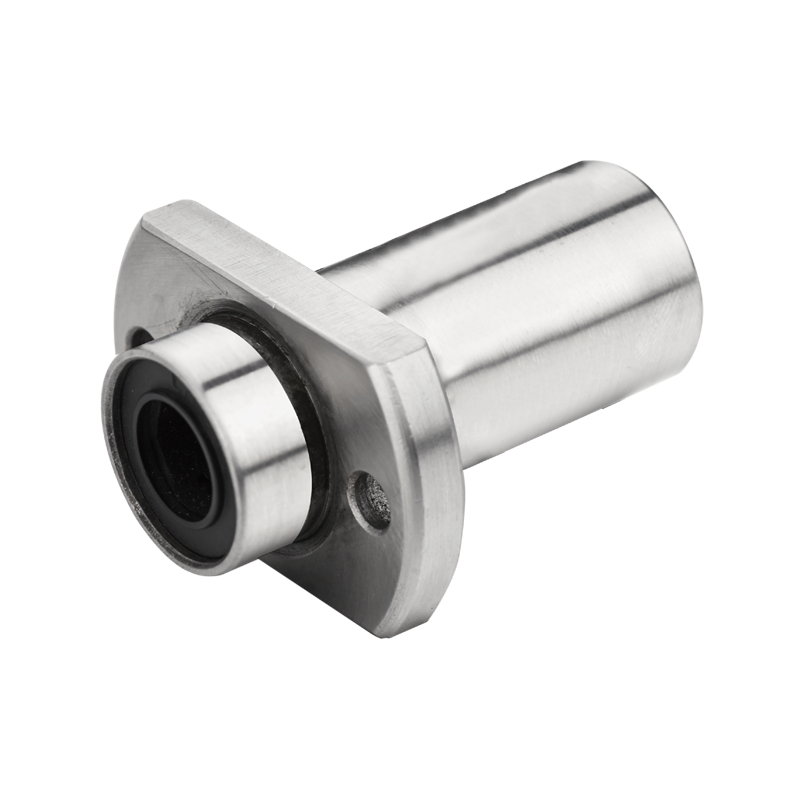
LMK-UU (Square/Rectangular Flange Standard Type) |
Key Selection Criteria |
| Core Positioning |
An economical, compact and secure mounting solution for general-purpose flanges. |
An economical, high-torque-resistance, robust mounting solution featuring reinforced flanges. |
Choose the LMF for ease of installation; choose the LMK if you require greater torque resistance and have a limited budget. |
| Flanges and Installation |
Round flanges typically feature 3–4 evenly spaced mounting holes. Installation is extremely straightforward, eliminating the need for a bearing housing, and providing secure fastening where radial space permits. |
Square or rectangular flanges provide a larger mounting contact area and a more favourable overturning moment arm. They are far superior to round flanges in resisting overturning and torsional loads. |
The F-type excels in ease of installation, whilst the K-type excels in stability. |
| Key Advantages |
1. Excellent value for money: Offers the best cost-performance ratio whilst ensuring easy installation.
2. Globally compatible: Based on the LM standard, with ample supply and hassle-free replacement.
3. Ready to install: Significantly simplifies the assembly process. |
1. High rigidity at low cost: Offers significantly enhanced torque resistance at a cost close to that of standard bearings.
2. More secure installation: Multi-point, wide-span fixing, suitable for vibrating environments.
3. Global compatibility equivalent to LMF. |
Both solve the problem of ‘how to secure the load more effectively’ at the lowest cost; the K-type addresses the issue of ‘how to secure the load more firmly to prevent overturning’. |
| Rigidity |
Good. Provides reliable radial support and basic torque resistance. |
High. Particularly adept at resisting overturning moments caused by load overhang, providing a solid foundation for light to medium-duty off-centre loading applications. |
When the load’s centre of gravity is significantly offset from the axis, the LMK’s superior rigidity is crucial. |
| Space Requirements |
Slightly larger radial dimensions (due to the circular flange), but high integration and good overall volume control. |
Larger radial dimensions (flange width) require a larger mounting surface, but this necessary spatial trade-off ensures stability. |
The F-type is more compact, whilst the K-type requires more space but offers greater stability. |
| Typical Applications |
Light-duty conveyor guidance, printer moving parts, automated inspection fixtures, educational experimental equipment. |
Spindle heads for medium-sized CNC engraving machines, lens movement mechanisms for laser marking machines, guidance systems for material lifting devices, and reciprocating motion units for packaging machinery. |
The F-type is suitable for lightweight, compact equipment, whilst the K-type is suitable for industrial equipment with moderate off-centre loads. |

 English
 Português
 русский
 Español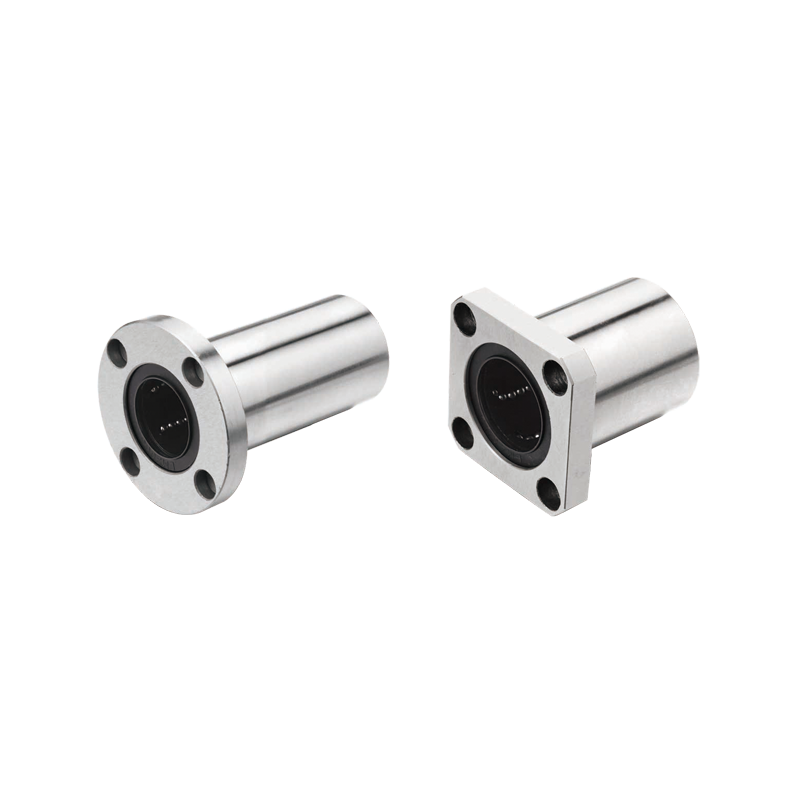
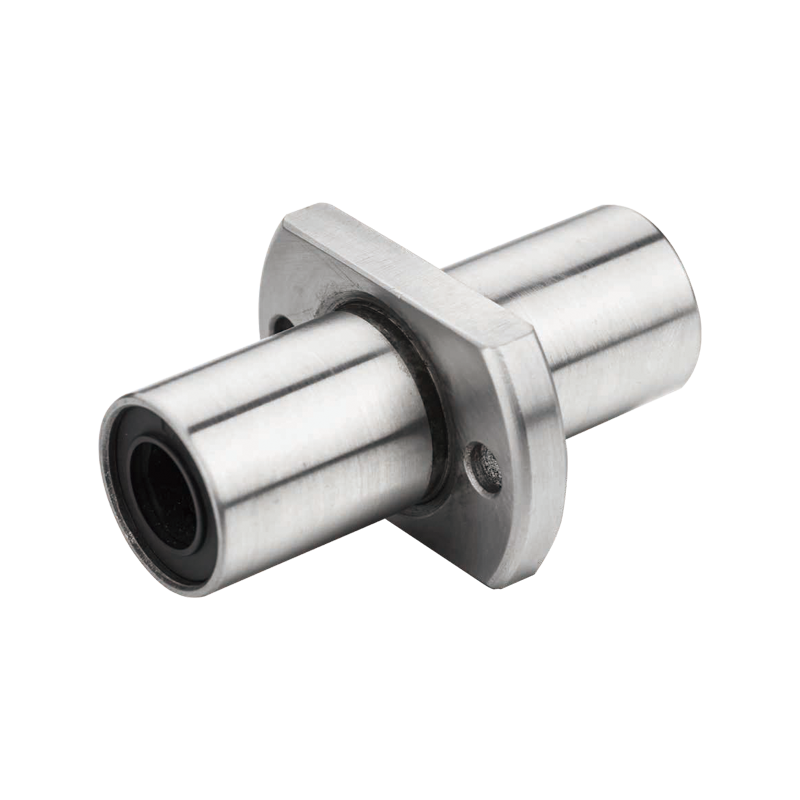 The LMHC-L-UU series linear bearing is a high-performance linear bearing that combine...
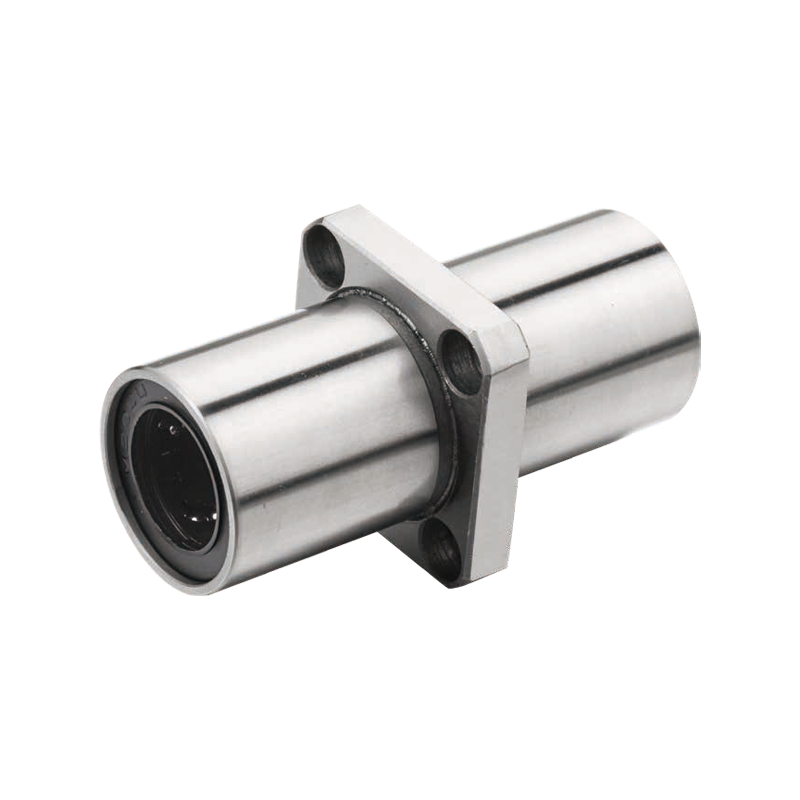 The LMFC/LMKC series linear bearing is a special type of linear bearing with a flange...
 The LMHP-L-UU series linear bearing is a pinnacle of design, combining four key featu...
 The LMFP-L/LMKP-L series linear bearings are linear bearings that combine three core ...
 The LMHP-UU series linear bearing is a high-end linear bearing that combines three ke...


