Follow us
Products · Products · Products · Products · Products · Products · Products · Products · Products · Products · Products · Products · Products · Products · Products · Products ·

LM-L-UU Long Type Linear Bearing

Home · Products · Linear Bearing · LM-L-UU Long Type Linear Bearing
LM-L-UU Long Type Linear Bearing

LM-L-UU Long Type Linear Bearing

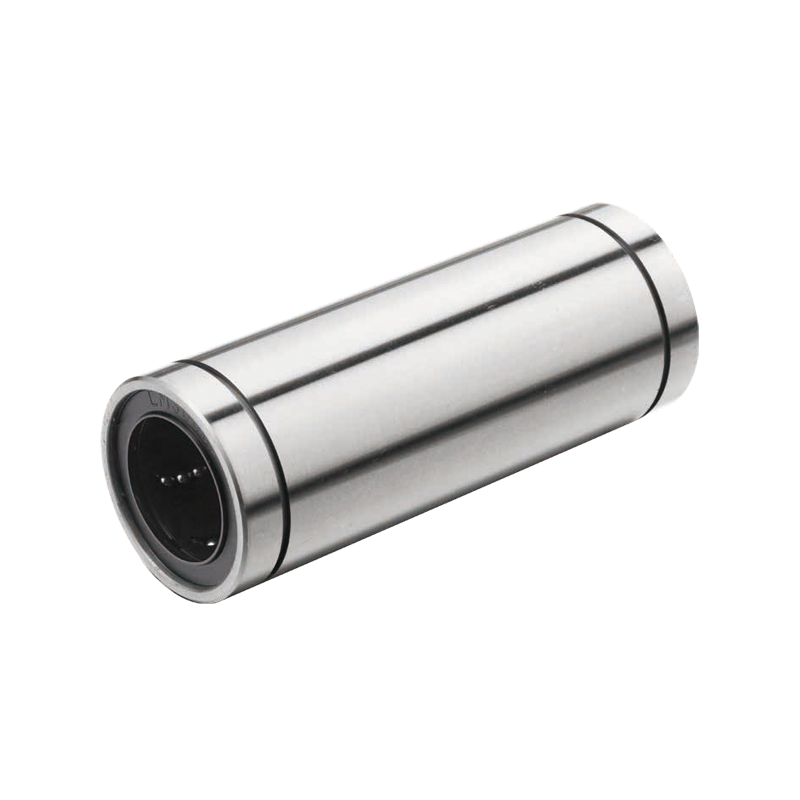
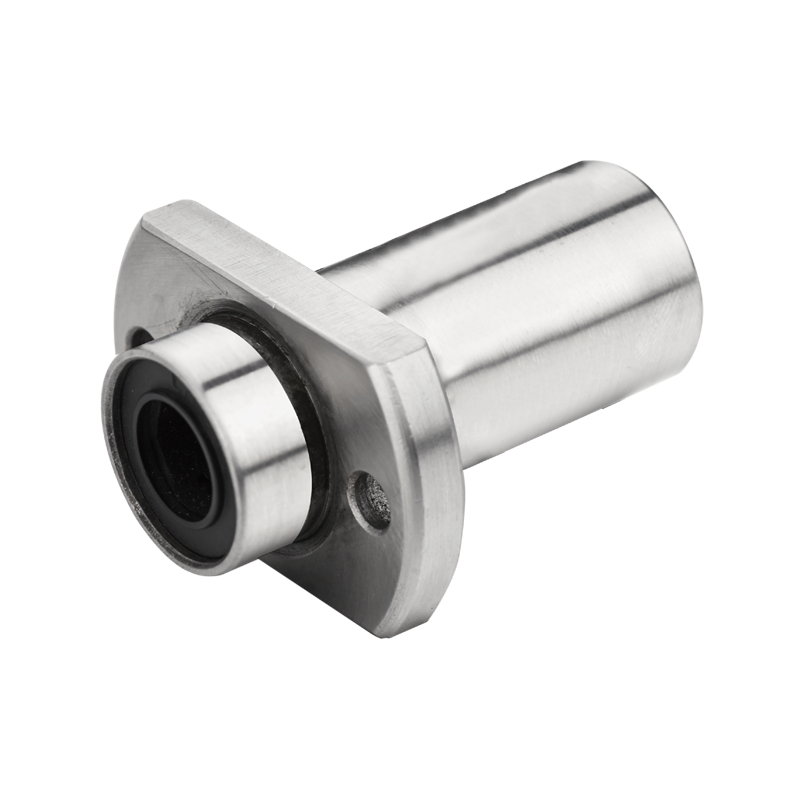
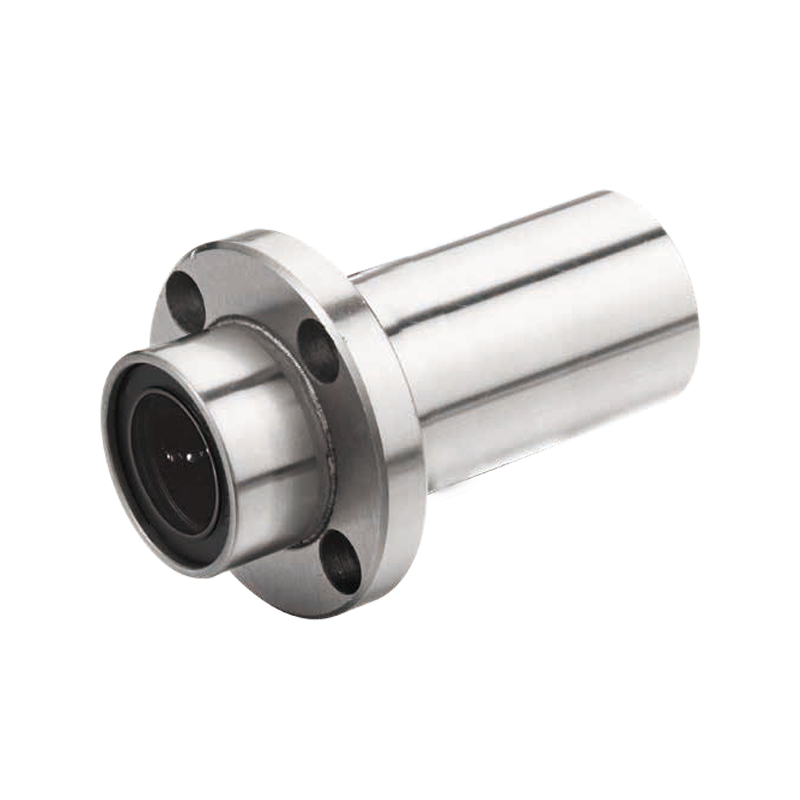
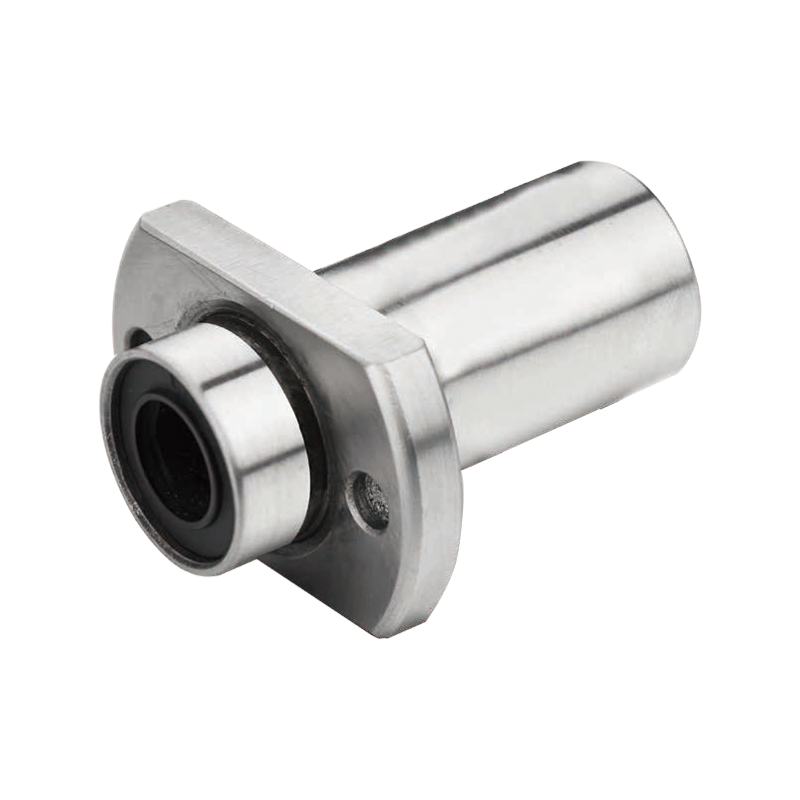
The LM-L-UU series is a design variant based on the standard LM-UU bearing, featuring a significantly increased length (L). Its core objective is to substantially improve the bearing's rated load capacity, bending moment rigidity, and operational stability by increasing the guiding contact length. This product is designed for medium to heavy-duty applications involving cantilever loads, eccentric moments, or requiring extremely high motion stability, and is a direct performance upgrade option when standard length bearings lack sufficient rigidity.

Technology

The core value of the LM-L-UU long type linear bearing lies in "transforming performance through a quantitative change in length," solving rigidity bottlenecks without changing the mounting interface.

Performance Dimensions LM-L-UU (Extended Type) Standard LM-UU (for comparison) Core Values
Core Positioning A heavy-duty, high-rigidity, ultra-stable extended-type standard solution. A standard solution for general-purpose, economical, light to medium-duty applications. The most direct and effective upgrade path when standard bearings reach their limits in terms of rigidity or load capacity.
Structural Design Significantly extended one-piece bushings. Their length (L) is typically 1.5 to 2 times, or more, that of standard models, providing an exceptionally long guiding contact surface. Standard-length bushings. The extended physical structure is the fundamental source of increased load-bearing capacity and rigidity.
Load Capacity Extremely high. Due to the increased contact area, both the rated static and dynamic load capacities are far higher than those of standard LM-UU bearings with the same bore diameter. High, suitable for most standard requirements. Enables a single bearing to support heavier loads, or to achieve a longer calculated service life (L10) under equivalent loads.
Rigidity (Bending Moment Resistance) Exceptional. The extended design provides immense resistance to bending and torsional loads, effectively suppressing slider overturning and raceway deformation caused by off-centre loading. Average, sensitive to off-centre loading. Provides a solid foundation for motion in cantilever structures, heavy-duty workbenches or long-span supports, ensuring end-point accuracy.
Smooth Operation Excellent. The extended guidance ensures more continuous support for the shaft and better damping, effectively absorbing vibrations and delivering exceptionally smooth and stable operation. Good. Particularly suitable for precision transmission at medium to low speeds or applications with stringent requirements for motion smoothness.
Accuracy Retention Superior. The larger contact area reduces the wear rate per unit area, and the extended guidance helps to average out minor straightness errors in the shaft. Good. Better maintains motion accuracy under heavy loads or during prolonged use.
Installation Compatibility Fully compatible with standard models. The fit dimensions for the inner diameter (d) and outer diameter (D) remain unchanged, so there is no need to modify existing shaft or mounting hole designs; direct replacement and upgrading are possible. Standard interface. Enables a ‘seamless upgrade’ in performance, requiring no redesign and offering easy replacement.

Technical Explanation: Why does "lengthening" significantly improve performance?
1. Mechanical Principle: According to material mechanics, under the same cross-section and load, the deflection deformation is directly proportional to the cube of the support length (L³). Therefore, moderately increasing the length can exponentially increase bending stiffness.
2. Load-bearing Principle: The rated load is directly related to the effective contact length and number of balls. The longer design means more balls participate in load bearing simultaneously, thus increasing the overall load capacity.
3. Selection and Replacement Guide:
When to upgrade: If, when using a standard LM-UU, you observe visible bending of the shaft, uneven bearing wear, or noticeable shaking during movement, you should immediately consider upgrading to the LM-L-UU.
How to select: Based on the existing shaft diameter and the required additional rigidity/load capacity, select the corresponding bore diameter LM-L-UU model. Note that you need to verify if the equipment space allows for the installation of a longer bearing.

Applications
The LM-L-UU long type linear bearing is an ideal choice for the following fields with demanding rigidity requirements:
Heavy-duty automation and handling: Forklift guidance for automated warehouse stackers, lifting shafts for heavy-duty transfer machines.
Industrial machinery: Medium-sized stamping press mold guidance, heavy-duty arm support for injection molding machine robots, back gauge guidance for sheet metal bending machines.
Special equipment: Stage lifting mechanisms, translational guidance for large medical equipment (such as CT scanning beds), vibration support for material screening equipment. This applies to any application using standard LM-UU bearings but facing problems with insufficient rigidity or short lifespan.

The LM-L-UU long-type linear bearing embodies a classic and powerful principle in mechanical design: fundamentally altering the mechanical behavior of a component by optimizing its critical dimensions.
Choosing the LM-L-UU means you are choosing an extremely practical and efficient engineering strategy. Without requiring complex new systems, expensive materials, or special designs, it solves the problems of rigidity, stability, and lifespan under heavy loads simply by using a "longer" standard component.

Parameters

Steel Type Ball circuit Major dimensions and tolerance Eccentricity (μm) Basic load rating Weight (g) Nominal shaft diameter (mm)
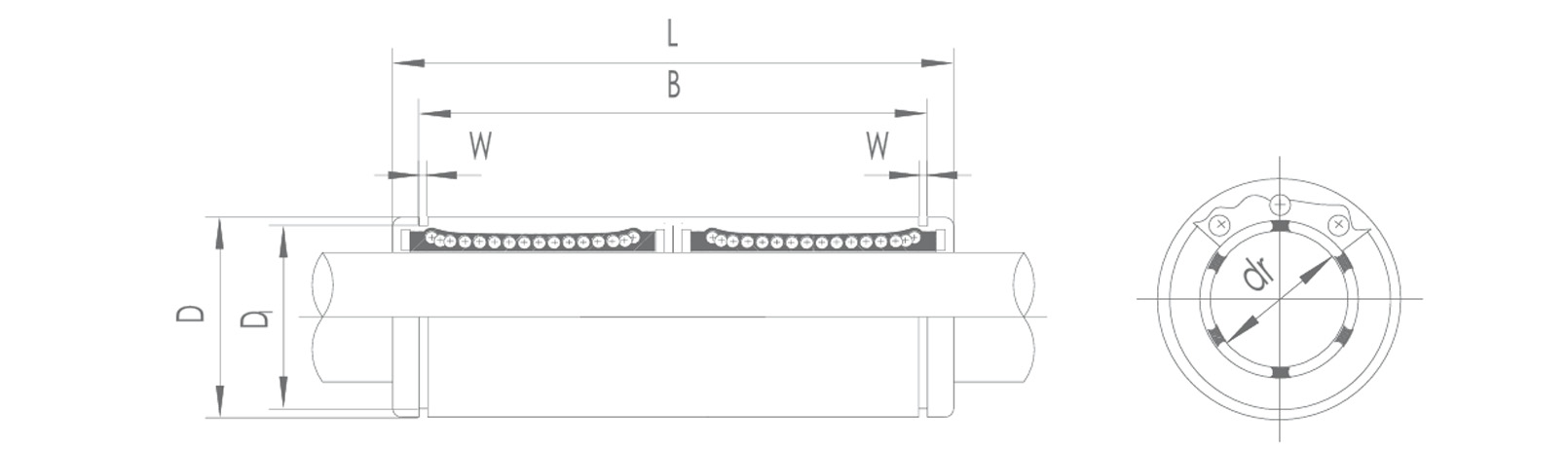
dr D L B W D1 dynamic (CN) static (Co N)
mm Tolerance(μm) mm Tolerance(μm) mm Tolerance(μm) mm mm mm mm
LM6L-UU 4 6 0-10 12 0-13 35 0-300 27 0-300 1.1 11.5 15 323 530 16 6
LM8L-UU 4 8 0-10 15 0-13 45 0-300 35 0-300 1.1 14.3 15 431 784 31 8
LM10L-UU 4 10 0-10 19 0-16 55 0-300 44 0-300 1.3 18 15 588 1100 62 10
LM12L-UU 4 12 0-10 21 0-16 57 0-300 46 0-300 1.3 20 15 813 1570 80 12
LM13L-UU 4 13 0-10 23 0-16 61 0-300 46 0-300 1.3 22 15 813 1570 90 13
LM16L-UU 4 16 0-10 28 0-16 70 0-300 53 0-300 1.6 27 15 1230 2350 145 16
LM20L-UU 5 20 0-12 32 0-19 80 0-300 61 0-300 1.6 30.5 20 1400 2740 180 20
LM25L-UU 6 25 0-12 40 0-19 112 0-400 82 0-400 1.85 38 20 1560 3140 440 25
LM30L-UU 6 30 0-12 45 0-19 123 0-400 89 0-400 1.85 43 20 2490 5490 480 30
LM35L-UU 6 35 0-15 52 0-22 135 0-400 99 0-400 2.1 49 25 2650 6270 795 35
LM40L-UU 6 40 0-15 60 0-22 151 0-400 121 0-400 2.1 57 25 3430 8040 1170 40
LM50L-UU 6 50 0-15 80 0-22 192 0-400 148 0-400 2.6 76.5 25 6080 15900 3100 50
LM60L-UU 6 60 0-20 90 0-25 209 0-400 170 0-400 3.15 86.5 30 7550 20000 3500 60

Drawings