 English
 Português
 русский
 Español
News ·
News ·
News ·
News ·
News ·
News ·
News ·
News ·
News ·
News ·
News ·
News ·
News ·
News ·
News ·
News ·

About us
Our team is proud to offer on time guarantee and product guarantee to customer satisfaction.
Read Morecontact info
- No.186 Xianglong Road, Lishui City, 323000 Zhejiang, China
- +86-13666550158
- lydia@wangong.net
Posted by Wangong
Rolled vs Ground Ball Screw: Which One Should You Choose?
In industrial automation and precision machinery design, the choice between a Rolled Ball Screw and a Ground Ball Screw is rarely as simple as picking the cheaper option or defaulting to the more accurate one. Engineers working on CNC machines, linear motion systems, and automated assembly equipment face a decision that sits at the intersection of performance requirements, production budget, and long-term system reliability. Getting it wrong at the specification stage creates problems that show up as positioning errors, premature wear, or unexpected downtime — none of which are easy to fix once the machine is built. Understanding Ball Screw Types and how their manufacturing differences translate into real application performance is where a sound selection decision begins.
What a Ball Screw Actually Does in an Industrial System
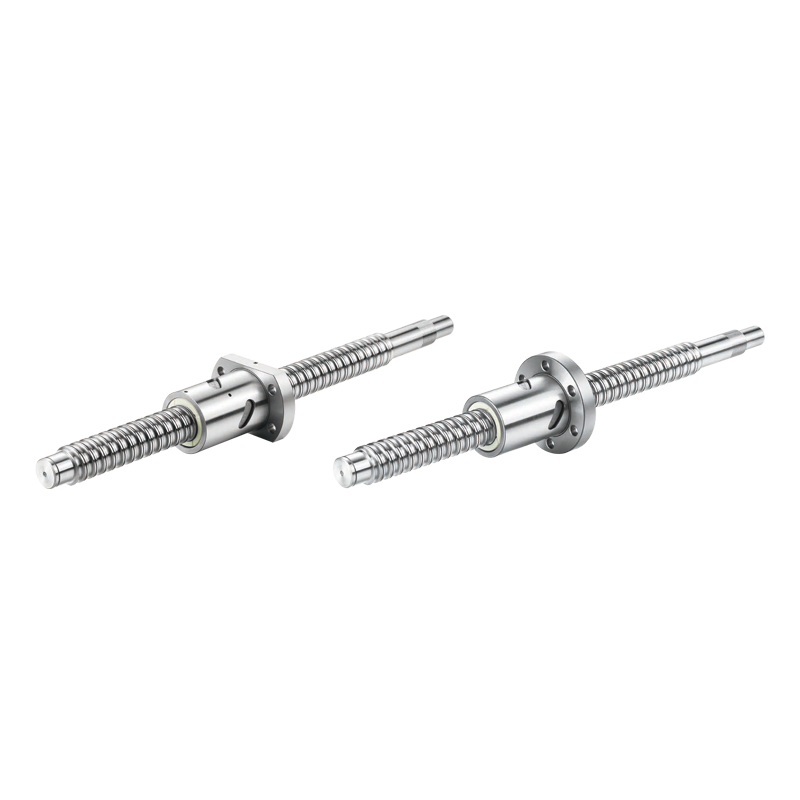
Converting Rotary Motion Into Precise Linear Movement
A ball screw assembly transmits motion and force between a rotating shaft and a nut by using recirculating steel balls that roll between a helical groove on the screw shaft and a matching groove inside the nut. Rolling contact reduces friction considerably compared with a conventional screw, allowing ball screws to deliver high mechanical efficiency, accurate positioning, and dependable repeatability over many operating cycles.
The practical consequence of that efficiency is significant. The difference between a ball screw and a conventional screw becomes immediately apparent in systems where energy consumption, positioning accuracy, and cycle life matter. A ball screw converts rotational input into linear output with far less frictional loss, which reduces heat generation, extends component life, and allows the drive motor to be sized more tightly to the actual load requirement.
For any engineer evaluating motion system components — whether for CNC machining, robotic positioning, semiconductor handling, or general industrial automation — the ball screw is typically the component that defines the system's positioning performance ceiling.
Understanding Ball Screw Types: Rolled and Ground
How Rolled Ball Screws Are Made
A Rolled Ball Screw is produced through a cold-forming process. The helical groove, called the thread form, is shaped by pressing hardened forming tools against a rotating steel blank. The material is displaced rather than removed, which work-hardens the surface and gives the thread a degree of compressive residual stress that can benefit fatigue resistance.
The cold rolling process is fast and cost-efficient at volume. Tooling wears gradually rather than being consumed per part in the way that grinding wheels are, and cycle times are short. These production economics produce a component that costs considerably less than a ground equivalent of the same size and lead.
The trade-off concerns dimensional precision. Cold rolling cannot produce the positional accuracy or surface finish uniformity achievable through precision grinding. The groove geometry is accurate, but not to the level that tight-tolerance applications require. For an industrial ball screw intended for general automation, conveying, or positioning applications where tolerances are measured in hundredths of a millimeter rather than micrometers, rolled construction is entirely appropriate.
How Ground Ball Screws Are Made
A Ground Ball Screw begins from a hardened steel blank that is formed to approximate shape and then finished using precision grinding wheels. The grinding process removes material in controlled increments, cutting the helical groove to exact geometry with surface finish and dimensional accuracy that cold rolling cannot match.
Grinding wheel selection, coolant application, grinding passes, and final inspection all contribute to a production process that is significantly more resource-intensive than rolling. Each pass of the grinding wheel requires careful control of depth, feed rate, and thermal management — because grinding generates heat that, if not properly managed, can alter the metallurgical state of the surface layer and compromise the dimensional accuracy being worked toward.
The resulting component has accurate thread pitch, consistent groove geometry over the full length, and surface finish quality that supports precise positioning. For CNC machining centers or precision measurement stages, a high-speed ball screw is usually ground, because rolling cannot meet the positional accuracy such applications demand.
Rolled Vs Ground Ball Screw: Key Performance Differences
The differences between rolled and Ground Ball Screws appear across several performance dimensions that matter in real application selection.
| Performance Factor | Rolled Ball Screw | Ground Ball Screw |
|---|---|---|
| Lead accuracy | Moderate — suitable for general use | High — suited to precision positioning |
| Surface finish | Good | Finer — lower friction, better repeatability |
| Repeatability | Adequate for standard automation | Tight — suited to CNC and precision stages |
| Speed capability | Moderate | High — suited to high speed ball screw systems |
| Load capacity | High — comparable to ground at equivalent size | High — comparable to rolled at equivalent size |
| Noise and vibration | Slightly higher | Lower at equivalent operating speed |
| Unit cost | Lower | Higher |
| Production volume suitability | High | More suited to precision, lower volume |
| Typical application | Industrial automation, general machinery | CNC, robotics, semiconductor equipment |
The load capacity comparison is worth noting specifically. Both types, when properly specified, can handle similar load ranges at equivalent sizes. The distinction is not primarily about load — it is about accuracy, speed, and the consistency of performance over the operating life of the component.
How Accuracy Requirements Should Drive the Selection
Defining What Accuracy Level Your Application Actually Needs
Ball screw accuracy is defined by positional error — the deviation between actual linear travel and theoretical travel per shaft rotation. Ground screws produce smaller positional errors than rolled screws across all standard accuracy grades.
The practical question is what accuracy grade the application requires. Not every system needs the tightest available grade. A conveying system that moves parts between workstations has fundamentally different positioning requirements from a five-axis CNC machining center cutting aerospace components. Specifying a Ground Ball Screw for the conveyor adds cost without adding functional value. Specifying a rolled screw for the machining center compromises the machine's positioning capability.
A structured approach to accuracy selection:
- Identify the positioning tolerance the application requires at the end effector or cutting point
- Trace backward through the kinematic chain to determine the positional accuracy the ball screw must provide to meet that system tolerance.
- Account for thermal effects, drive train compliance, and controller compensation that will affect system-level accuracy
- Select the accuracy grade that meets the requirement with appropriate margin
For general industrial automation, conveying, and non-precision lifting applications, rolled screws cover the accuracy requirement comfortably. For CNC machining, precision measurement, semiconductor handling, and high-end robotics, ground screws are the appropriate specification.
Speed, Load, and Application Matching
High Speed Applications and Why Ground Screws Are Preferred
Operating speed in a ball screw system is limited by a parameter called the DN value — a product of shaft diameter and rotational speed. As speed increases, dynamic loads on the recirculating balls increase, and the precision of the groove geometry becomes more important for smooth, controlled ball motion.
In high speed ball screw applications — rapid traverse in CNC machining, fast axis motion in automation cells, or high-cycle positioning systems — the finer surface finish and tighter geometry of ground screws produces smoother ball circulation, lower vibration levels, and more predictable dynamic behavior than rolled screws at the same speed.
This matters because vibration at speed affects positioning accuracy, surface finish in machining applications, and long-term wear rates of the ball and groove surfaces. A rolled screw that performs adequately at moderate speeds may exhibit chatter or hunting behavior at higher speeds that a ground equivalent would handle without issue.
Heavy Duty Applications and Where Rolled Screws Excel
For heavy duty ball screw applications — large industrial presses, heavy-axis machine tools, material handling systems with high axial loads — the strength and fatigue resistance of rolled construction is genuinely competitive with ground alternatives. The compressive residual stress introduced by cold rolling can actually improve fatigue performance in high-load cycling applications compared to ground screws of similar surface hardness.
The combination of high load capacity, lower cost, and adequate accuracy makes rolled screws the practical choice for industrial applications where force transmission and durability matter more than sub-millimeter positioning precision.
Heavy duty industrial conveying systems, automated material handling equipment, large-format printing machinery, and agricultural equipment automation all represent application categories where Rolled Ball Screws perform reliably over long service lives without requiring the precision grade of a ground component.
Cost Versus Precision: The Trade-Off That Defines the Decision
Understanding the Real Cost Difference Between Types
The cost gap between rolled and Ground Ball Screws is real and significant — but it is not uniform across all sizes and specifications. Smaller diameter screws show a more moderate cost difference than large-diameter, long-lead screws where the grinding time and wheel consumption are substantial. The overall project economics need to consider the cost difference in the context of the total system cost.
A few practical cost considerations:
- The cost of a rolled screw is one element. The cost of a ground screw is higher, but so is the machine performance it enables.
- In high-volume production of standard automation equipment, the accumulated cost difference across many ball screw assemblies is meaningful. In a single precision machine tool where accuracy drives product capability, the cost difference is secondary to the performance specification.
- Maintenance and replacement costs over the system's operating life matter as much as initial purchase price. A rolled screw that wears faster under conditions better suited to a ground equivalent will cost more over time despite lower initial price.
- Custom ball screw solutions — non-standard lead, diameter, or length — are available in both types, but custom ground screws carry higher non-recurring engineering and tooling costs than custom rolled equivalents.
Application Scenarios: Which Type Fits Which System?
CNC Machining Centers
Ground ball screws are the standard specification for CNC machining center axis drives. The positioning accuracy, repeatability, and smooth motion at cutting speeds called for by these machines are consistent with the performance attributes of a ground construction. In CNC applications, linear axes and rotary axis drives both derive benefit from the pitch accuracy that grinding provides.
Industrial Automation Systems
Rolled Ball Screws cover the requirements of the large majority of industrial automation applications — pick-and-place systems, assembly fixtures, gantry actuators, conveying systems, and general positioning stages where tolerances are in the range of tenths of a millimeter rather than micrometers. The cost efficiency of rolled construction makes it particularly attractive in multi-axis automation cells where the per-axis screw cost multiplies across the total system.
Robotics and Collaborative Automation
The ball screw specification in robotics depends heavily on the robot architecture and application. Precision assembly robots with tight path accuracy requirements may use ground screws in critical joints. General-purpose handling robots operating at coarser tolerances can use rolled alternatives. The selection logic follows the positioning requirement of the specific joint and task rather than a blanket decision for the robot category.
Custom and Non-Standard Applications
When standard catalog specifications do not suit the application—unusual stroke lengths, non‑standard pitches, harsh environmental conditions, or combined load‑speed demands outside catalog limits—a custom ball screw becomes a relevant option. A manufacturer with suitable capabilities can develop custom specifications in either rolled or ground construction, depending on the accuracy required for that application.
How to Structure the Selection Decision
A Step-by-Step Approach to Ball Screw Type Selection
A structured selection process produces better outcomes than relying on habit or defaulting to the more expensive option without evaluating whether the accuracy justifies the cost.
- Define the application type and positioning requirement — what accuracy does the end application actually need at the point of use?
- Identify the operating speed range — will the screw operate at speeds where ground construction's smoother ball circulation matters?
- Determine the axial load profile — peak load, average load, and load cycling frequency all affect which type is appropriate and what size is needed
- Evaluate the stroke length and duty cycle — longer strokes and higher duty cycles favor higher quality construction for wear life reasons
- Assess the system environment — temperature, contamination, and vibration levels in the installation environment affect how both types perform over time
- Consider the production volume and budget — for high-volume equipment production, the accumulated cost difference between types matters; for single precision machines, performance takes priority
- Determine if standard catalog products fit — if not, work with a custom ball screw supplier to develop the specification
What to Look for in a Ball Screw Supplier
Capability Verification Goes Beyond Product Catalog
Selecting the right ball screw type is only part of the decision. Supplier capability determines whether the product delivered matches the specification, maintains consistency across batches, and supports the application through its full operating life.
Key factors in evaluating a ball screw company:
- Production process capability: Does the supplier have grinding capability for ground screws, and is their rolling process controlled to consistent accuracy grades?
- Accuracy grade documentation: Can they provide dimensional inspection data on pitch accuracy and surface finish, rather than nominal specifications only?
- Custom development capability: For non-standard requirements, do they have the engineering resources to develop and validate custom specifications?
- Quality management system: Are their production and inspection processes documented and consistently followed?
- Application engineering support: Can their technical team engage with application-level questions about load, speed, and system integration rather than only discussing catalog parameters?
- Supply consistency: For production procurement, can they maintain dimensional consistency across repeat orders without requiring re-qualification?
A supplier who demonstrates capability across these dimensions reduces procurement risk substantially compared to one who competes only on unit price.
Questions Engineers and Procurement Teams Commonly Ask
What is the difference between a rolled and Ground Ball Screw?
Distinction comes from the manufacturing process and the accuracy it delivers. Rolled screws are made by cold rolling, which is cost-efficient and produces moderate accuracy. Ground screws are finished by precision grinding, which achieves tighter pitch accuracy and improved surface finish, but at increased cost.
Which ball screw type is more accurate?
Ground ball screws provide tighter pitch accuracy across standard accuracy grades. For applications requiring precise positioning — CNC machining, precision measurement stages, semiconductor equipment — ground construction is a suitable choice.
Can a Rolled Ball Screw work in a CNC machine?
For light-duty or lower-precision CNC applications, rolled screws are a viable option. For machining centers where positioning accuracy directly affects part quality, ground screws are the appropriate choice. The difference in positional accuracy between the two types becomes directly visible in the machining result.
What is a heavy duty ball screw used for?
Heavy duty ball screws are specified for applications with high axial loads — large machine tools, industrial presses, heavy-axis gantry systems, and material handling equipment. Both rolled and ground types are available in heavy duty configurations; the selection between them follows the accuracy requirement of the specific application.
What does the difference between a threaded screw and a ball screw mean in practice?
A threaded screw operates through sliding contact between the screw thread and nut, resulting in higher friction and lower efficiency. A ball screw uses recirculating balls to produce rolling contact, which reduces friction and allows for faster operation, finer positioning, and a longer service life. In precision and high-cycle automation applications, the performance difference is noticeable.
When should a custom ball screw be considered?
Custom ball screw development is appropriate when standard catalog specifications do not match the application — unusual stroke length, non-standard lead, combined load and speed requirements that fall outside standard range, or application-specific environmental requirements. A capable ball screw company can develop and validate custom specifications in both rolled and ground construction.
The choice between a rolled and Ground Ball Screw is ultimately a decision about matching manufacturing process to application requirement — not about one type being categorically better than the other. Rolled screws deliver reliable performance in the large majority of industrial automation applications at a cost that makes production economics work. Ground screws deliver the accuracy and smooth high-speed operation that precision machinery demands, at a cost premium that precision applications justify. Understanding where your application sits on that spectrum — and verifying that the supplier can deliver what the specification requires — is what produces a decision that holds up through the full operating life of the system. Lishui Wangong Precision Machinery Co., Ltd. manufactures ball screws in both rolled and ground configurations across a range of accuracy grades, sizes, and custom specifications, with production capabilities serving industrial automation, CNC machinery, and precision equipment applications. For engineers and procurement teams working through ball screw type selection or custom development requirements, reaching out to their technical team is a practical starting point for turning a specification question into a verified sourcing solution.
keep
in touch.
in touch.
-

Address: No.186 Xianglong Road, Lishui City, 323000 Zhejiang, China
-

E-Mail: lydia@wangong.net
-

Tel: +86-13666550158
Copyright © 2026 Lishui Wangong Precision Machinery Co., Ltd.

Ball Screw Manufacturer