 English
 Português
 русский
 Español
News ·
News ·
News ·
News ·
News ·
News ·
News ·
News ·
News ·
News ·
News ·
News ·
News ·
News ·
News ·
News ·

About us
Our team is proud to offer on time guarantee and product guarantee to customer satisfaction.
Read Morecontact info
- No.186 Xianglong Road, Lishui City, 323000 Zhejiang, China
- +86-13666550158
- lydia@wangong.net
Posted by Wangong
Cost vs Precision: How Buyers Select Ball Screw Types
A budget friendly screw and a tightly toleranced precision component rarely get chosen through a simple side by side price comparison, no matter how the quote sheet is laid out. Buyers comparing Ball Screw Types often learn this the hard way, after a cheaper option introduces backlash or positioning drift that costs more to fix than the original savings were worth. The real question is not which screw costs less, but which combination of accuracy and price actually matches the machine the part is going into. The sections below cover how these components function, what separates the main categories on the market, and how application demands, material choice, and supplier evaluation all feed into a sound purchasing decision. Treating the decision as cheap versus expensive misses what actually drives the price gap between them. Two screws priced far apart can both be reasonable purchases, just for different machines, and understanding why that gap exists makes it easier to spend more where it counts and hold back where it does not.
What Is a Ball Screw and How Does It Work?
A ball screw converts rotational motion into linear motion through a series of recirculating balls that roll between a grooved shaft and a matching nut assembly. That rolling contact takes the place of the sliding friction found in simpler threaded mechanisms, cutting down on wear and letting motion transfer through the assembly with less energy loss.
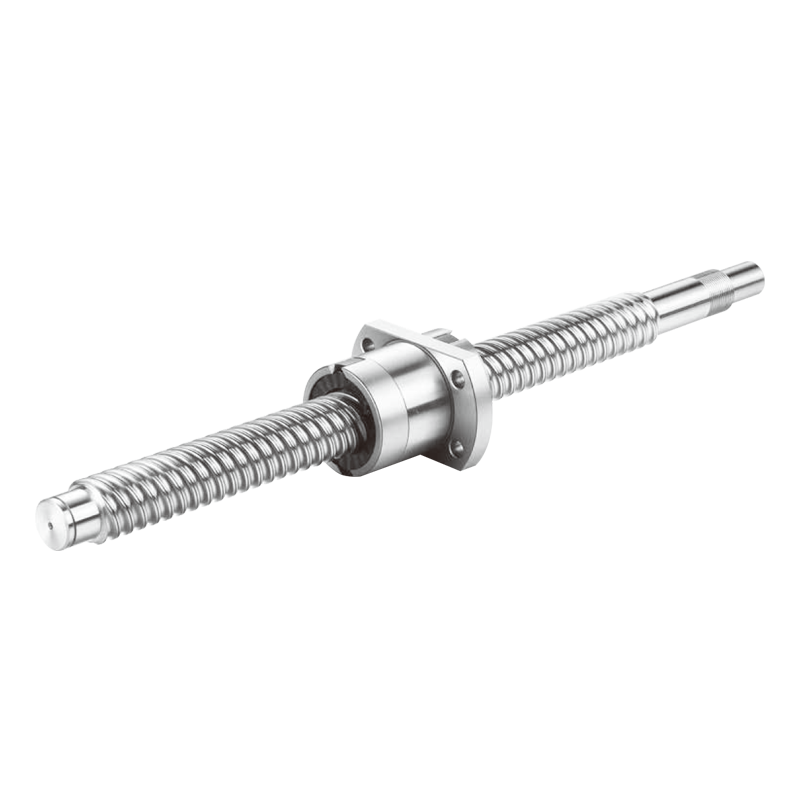
That efficiency comes at a price, and this is where cost starts to enter the picture. Machining a shaft groove and matching ball channel tight enough to keep the balls rolling smoothly demands closer manufacturing tolerances than a standard threaded rod ever needs, and that extra precision shows up in the price tag before precision grade even gets discussed.
Preload, a slight internal tension built between the balls and the grooves, shapes how the assembly behaves once installed. A properly preloaded unit cuts down on backlash, the small amount of play that shows up when motion direction reverses, and that detail matters a great deal on equipment that changes direction often during a work cycle.
What Are the Main Screw Categories Buyers Compare?
Manufacturing method is usually where buyers begin splitting these screw categories apart, because it shapes both accuracy and price more than almost anything else.
- Ground ball screws, machined through a grinding process that holds tight dimensional accuracy
- Rolled ball screws, formed through a rolling process that costs less but accepts a wider tolerance band
- Miniature ball screws, sized for compact equipment and lighter load applications
- Heavy Duty Ball Screws, built with larger diameters and reinforced construction for demanding loads
Each category fits a different combination of budget and performance, and knowing which one matches the application at hand keeps a buyer from paying for accuracy a project does not need, or from underspending on a part that cannot handle the load.
Why Does Precision Increase Manufacturing Cost?
Grinding a shaft to hold consistent lead accuracy along its full length takes far longer than rolling the same shaft, and that extra processing time lands directly in the unit price. Tighter tolerance bands also call for closer inspection during production, because even small deviations can throw off positioning accuracy after the screw goes into a machine.
| Comparison Point | Ground Ball Screw | Rolled Ball Screw |
|---|---|---|
| Dimensional Accuracy | Tight, consistent lead accuracy | Wider lead tolerance band |
| Manufacturing Cost | Higher | Lower |
| Surface Finish | Smooth and refined | Adequate for general use |
| Typical Applications | Precision CNC machines, measurement equipment | General automation, lower-precision applications |
Plenty of applications can run perfectly well on a rolled screw if positioning error has little real consequence, while equipment sensitive to small shifts in position justifies paying for a ground screw instead. Guessing rarely settles this well. Checking actual tolerance requirements against what each manufacturing method can realistically deliver is the more dependable path.
How Does a Lead Screw Differ From a Ball Screw?
The Lead Screw and Ball Screw Difference comes down to friction. A lead screw runs on sliding contact between the nut and threaded shaft, generating more friction and heat during operation than the rolling contact found inside a ball screw.
That difference plays out in a few practical ways for anyone weighing the two:
- Lead screws generally cost less to produce and purchase
- Ball screws move more efficiently, needing less input torque for the same load
- Lead screws often provide natural self locking behavior under load, a trait some applications rely on deliberately
- Ball screws typically wear more slowly under continuous operation thanks to reduced friction
Vertical lift mechanisms and similar setups sometimes call for a lead screw specifically because of that self locking trait, choosing it for behavior rather than for cost alone.
How Does Application Affect Ball Screw Selection?
Matching screw type to the equipment it serves narrows the cost versus precision question quickly, because different machine categories prioritize different traits.
CNC Machines Demand Positioning Accuracy
Computer controlled machining equipment relies on consistent, repeatable positioning to hold part tolerances across a production run, which usually points toward a ground screw with tight lead accuracy over a rolled alternative.
Industrial Automation Often Prioritizes Speed
Automated handling and assembly systems frequently value cycle time over micron level positioning, making a High Speed Ball Screw built for rapid linear movement a better fit than a screw optimized purely for accuracy.
Heavy Machinery Requires Durability Under Load
Equipment carrying substantial axial loads needs a Heavy Duty Ball Screw with reinforced shaft diameter and load rated ball circuits, since standard sizing can wear prematurely or deflect under sustained stress. This is also the territory where an Industrial Ball Screw built for continuous duty cycles holds up better than a component meant mainly for lighter, intermittent use.
How Does Material Choice Affect Ball Screw Performance?
Shaft and nut material matters just as much as manufacturing method once moisture, washdown cycles, or corrosive substances enter the picture. A Stainless Steel Ball Screw resists corrosion far better than standard carbon steel, which is why it shows up so often across food processing equipment, medical devices, and outdoor automation systems.
Carbon steel still works well in dry, controlled indoor environments where corrosion risk stays low, and it costs less than a stainless steel equivalent of comparable size. Anyone working in humid, washdown, or chemically exposed settings should weigh that corrosion resistance against the added material cost rather than defaulting to a standard part out of habit.
What Should Buyers Confirm About Ball Screw Dimensions?
Ball Screw Dimensions go well beyond shaft diameter, and missing even one measurement can leave a buyer with a part that physically will not fit existing equipment or mounting hardware.
A practical checklist for confirming fit includes:
- Shaft diameter and overall screw length
- Lead value, which sets how far the nut travels per shaft rotation
- End machining configuration, including bearing support and mounting features
- Nut style and flange dimensions for compatibility with the housing
Checking these details against existing equipment drawings before placing an order heads off a mismatch that otherwise only shows up once the part arrives and installation begins. Pulling dimensions from a worn part instead of original documentation introduces its own risk, since wear changes the effective measurements over time, so cross checking against the original specification wherever it is available remains the steadier approach.
When Does a Custom Ball Screw Make Sense Over a Standard Option?
A Custom Ball Screw earns its place once an application falls outside the dimensions, lead values, or end configurations found in standard catalog offerings. Equipment built around unusual mounting constraints, non standard shaft lengths, or specific load and speed combinations often cannot be served well by an off the shelf part.
A few situations that commonly push buyers toward a custom specification:
- Equipment retrofits where existing mounting hardware cannot change
- Specialized lead requirements for unusual speed or precision targets
- Non standard shaft length driven by enclosure or frame constraints
- Application specific end machining not available in catalog parts
Custom production generally means longer production turnaround and a higher per unit cost than standard parts, which is why it makes sense mainly when a standard option genuinely falls short rather than as a default starting point.
How Do Load and Speed Ratings Influence the Final Decision?
Every ball screw carries practical limits on how much load it can bear and how fast it can rotate before performance starts to slip, separate from manufacturing method or material. These two ratings interact with each other, since a screw running near its speed limit usually cannot also carry its full rated load without wearing faster than expected.
Checking both figures together, rather than looking at either one in isolation against a single requirement, gives a clearer picture.
- Axial load capacity relative to the actual force the application applies
- Rated rotational speed relative to the travel speed the equipment needs
- Combined load and speed conditions during continuous operation, not just peak moments
- Margin built into the rating to cover vibration, misalignment, or duty cycle variation
A screw rated comfortably above the application requirement, rather than one that just barely clears it on paper, tends to run longer before failure becomes a concern. That margin counts for a lot on equipment running continuously across long shifts, where even a small cut in cycle stress adds up to noticeably fewer maintenance interruptions over time.
How Should Buyers Evaluate a Ball Screw Company Before Ordering?
Choosing a dependable Ball Screw Company matters just as much as picking the right type and material, because manufacturing consistency decides whether a part performs the way the specification promised once it is actually installed.
A few points worth checking before committing to a supplier:
- Manufacturing capability across both ground and rolled production methods
- Quality control procedures applied during machining and final inspection
- Willingness to support custom specifications when standard parts fall short
- Documentation and certification supporting dimensional accuracy claims
- Communication and technical support throughout the ordering process
A supplier willing to walk through tradeoffs honestly, instead of simply quoting a price, generally helps buyers avoid the kind of mismatch between specification and actual need that shows up only after installation.
Why Do Many Buyers Source From a China Ball Screw Manufacturing Base?
Buyers sourcing mechanical transmission components often look toward established China Ball Screw manufacturing regions, drawn by the concentration of machining capability, raw material access, and production capacity sitting within a single supply network. That concentration shortens development cycles for custom specifications compared with piecing together a supply chain from separate, scattered sources.
Cost efficiency plays into this as well. Manufacturing clusters with established tooling and skilled labor can turn out both standard parts and custom specifications without the overhead that comes from coordinating raw material, machining, and finishing across different suppliers. Buyers running several equipment programs with different dimensional or material needs often find it easier to work with one supplier already set up to handle that range.
Matching Cost and Precision to the Right Ball Screw Type
Working through manufacturing method, application demands, material requirements, and dimensional fit gives buyers a structured way to weigh cost against precision instead of guessing based on price alone. A ground screw earns its higher price wherever positioning accuracy feeds directly into product quality, while a rolled screw remains a sound, lower cost choice wherever tolerance requirements stay forgiving. Lishui Wangong Precision Machinery Co., Ltd. supports buyers working through these decisions, offering both standard and custom specifications across ground, rolled, and stainless steel construction, along with documentation to confirm dimensional accuracy before an order is placed. Engineers and procurement teams sorting through a new equipment specification, or replacing a worn component on existing machinery, are welcome to share their application details and request guidance on matching the right ball screw type to the job.
keep
in touch.
in touch.
-

Address: No.186 Xianglong Road, Lishui City, 323000 Zhejiang, China
-

E-Mail: lydia@wangong.net
-

Tel: +86-13666550158
Copyright © 2026 Lishui Wangong Precision Machinery Co., Ltd.

Ball Screw Manufacturer