 English
 Português
 русский
 Español
News ·
News ·
News ·
News ·
News ·
News ·
News ·
News ·
News ·
News ·
News ·
News ·
News ·
News ·
News ·
News ·

About us
Our team is proud to offer on time guarantee and product guarantee to customer satisfaction.
Read Morecontact info
- No.186 Xianglong Road, Lishui City, 323000 Zhejiang, China
- +86-13666550158
- lydia@wangong.net
Posted by Wangong
Miniature Ball Screw Delivery: Protect the Matched Assembly
A miniature ball screw may arrive long before it is fitted to the machine. During that interval it can be moved between receiving, inspection and assembly areas. Clear identification and suitable handling help keep the supplied shaft and nut together and protect the component until installation.
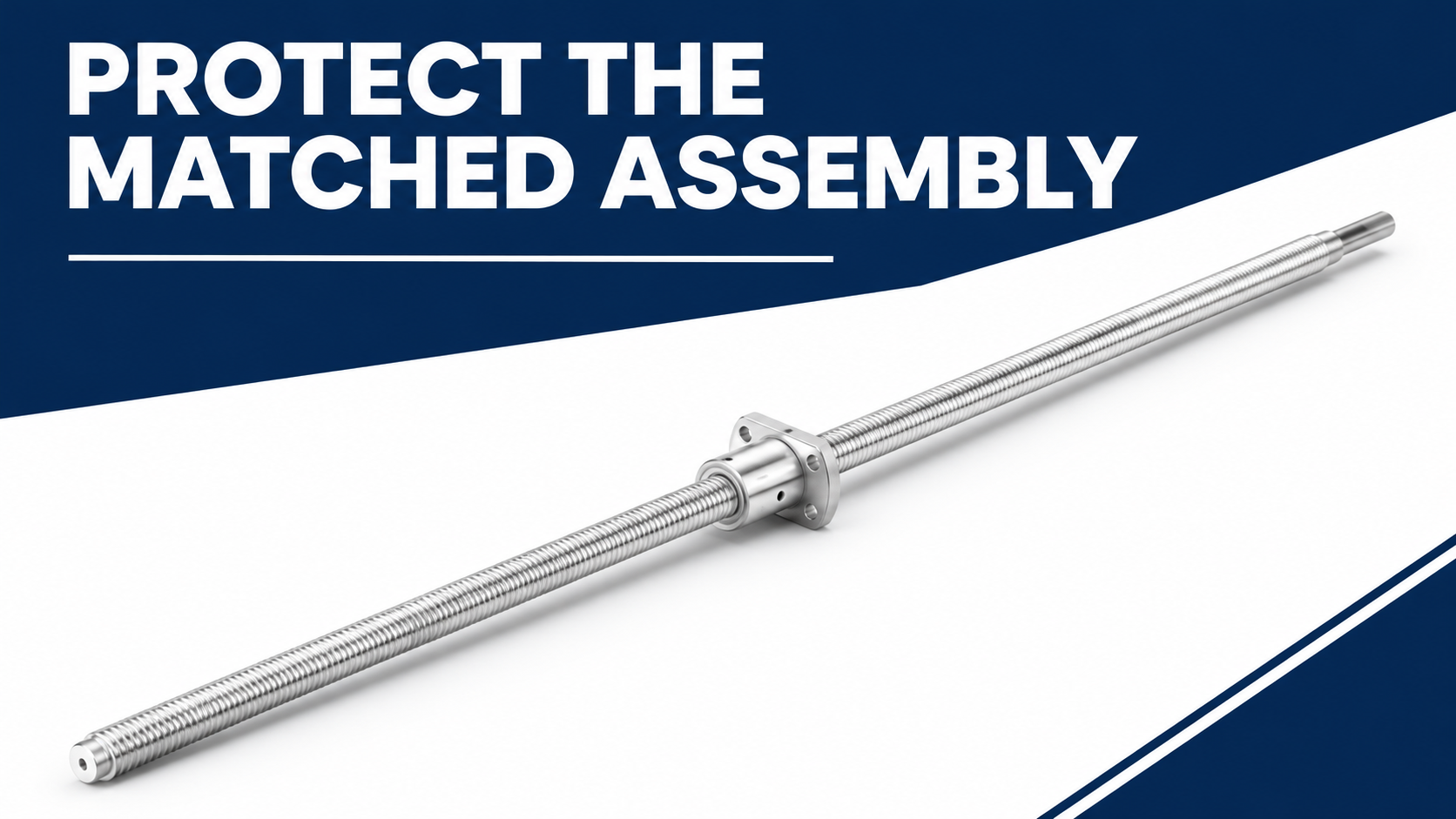
Wangong’s Mini Type SFK Series Ball Screw is a compact transmission component. The product photograph shows the shaft and nut as an assembly. For procurement, that assembly should remain connected to its model, drawing and inspection information throughout delivery and machine build.
What exactly should be identified?
Put the ordered model, drawing revision and quantity on the purchase specification. Where end machining or other project details are customised, reference the approved drawing rather than relying on the series name alone. Two assemblies can share a series designation while serving different positions in a machine.
Ask how the supplier identifies each delivered assembly and any related documents. The answer should suit the project’s traceability needs without requiring markings that might damage working surfaces. A label on the outside carton is useful, but the relationship can be lost when several assemblies are unpacked together.
Keep the shaft and nut as supplied unless the relevant instructions require a different action. Do not assume that nuts from similar-looking assemblies can be exchanged. Any proposed replacement or interchange should be reviewed against the supplier’s requirements for the exact component.
Discuss support before dispatch
The packaging should support the assembly in a way appropriate to its dimensions and supplied condition. A long slender component needs a different review from a compact block. Ask the supplier to explain how the assembly is supported and restrained within the package rather than judging protection from the outer carton alone.
Identify projections and finished interfaces that need protection. End-machined areas, the screw raceway and the nut can each have different contact considerations. The packaging method should avoid relying on vulnerable surfaces as convenient locating points without engineering review.
Confirm how the nut is prevented from moving unintentionally during shipment. Follow the supplied method and instructions. Do not invent a transport restraint or tighten a clamp against the screw because it appears to keep the parts still. An unsuitable restraint can introduce its own damage.
A receiving checklist with useful distinctions
| Check | What to record |
|---|---|
| Package identity | Order, model and assembly quantity |
| Package condition | Visible damage or displacement before opening |
| Assembly identification | Relationship to the approved drawing and documents |
| Protection | Support, restraints and visible surface condition |
| Next location | Controlled storage or release to assembly |
Inspect the package before disturbing its internal arrangement. Photograph any evidence of shifting or impact so the supplier can see how the assembly was positioned. Keep the observation factual; packaging damage does not automatically prove a bent shaft, and an intact package does not establish dimensional acceptance.
Use the agreed inspection method for the component. A visual review can identify obvious concerns, but it cannot confirm lead accuracy or every other specified property. Keep the scope of incoming inspection separate from the supplier’s inspection documents and the machine’s later acceptance work.
Unpack for the next operation
Prepare a clean, suitable surface before opening the inner protection. Remove packing material in a sequence that keeps the assembly supported. Avoid leaving the screw balanced across unrelated objects or allowing a loose component to roll into neighbouring equipment.
Identify any transport restraints and confirm when they should be removed. The receiving team may need to retain some protection until the installation stage. If instructions are unclear, ask for clarification with photographs and the assembly identity rather than experimenting with the nut or shaft.
- Keep assemblies and their labels together.
- Separate packing materials from components that must be retained.
- Protect working surfaces during transfers between departments.
- Record a concern before cleaning or modifying the supplied condition.
- Follow the supplier’s installation instructions for the next step.
Storage should preserve identification as well as condition
Choose storage conditions based on the supplier’s guidance and the factory’s component-control process. Preserve any specified protective treatment or packaging until the appropriate stage. Do not infer a storage period or environmental limit from a photograph of the product.
If assemblies are issued to different machine stations, record that allocation. A short internal transfer can break traceability when several similar components share a bench. Keep the drawing or station reference with the assembly through the handover to the installer.
Repacking a component after inspection should restore the intended support and protection. Placing it loosely into the original outer carton does not reproduce the supplier’s packing arrangement. Retain or replace the relevant internal protection through the agreed procedure.
A clear response when something looks wrong
If a surface mark or unexpected movement is observed, record its location and the component identity. Describe what was seen and which handling steps have occurred since delivery. This information gives the supplier a better basis for deciding what further inspection is appropriate.
Avoid running the nut along the shaft or dismantling the assembly merely to investigate an uncertain symptom. Such actions may change the supplied condition and make the original concern harder to assess. Use the applicable instructions and obtain technical guidance where the next step is unclear.
A delivery specification for a miniature screw should therefore address more than carton dimensions. Identity, support, restraint, unpacking and controlled storage all contribute to preserving the supplied assembly. That gives Wangong and the buyer a clearer reference when the component moves from a purchased part into the final machine.
keep
in touch.
in touch.
-

Address: No.186 Xianglong Road, Lishui City, 323000 Zhejiang, China
-

E-Mail: lydia@wangong.net
-

Tel: +86-13666550158
Copyright © 2026 Lishui Wangong Precision Machinery Co., Ltd.

Ball Screw Manufacturer