 English
 Português
 русский
 Español
News ·
News ·
News ·
News ·
News ·
News ·
News ·
News ·
News ·
News ·
News ·
News ·
News ·
News ·
News ·
News ·

About us
Our team is proud to offer on time guarantee and product guarantee to customer satisfaction.
Read Morecontact info
- No.186 Xianglong Road, Lishui City, 323000 Zhejiang, China
- +86-13666550158
- lydia@wangong.net
Posted by Wangong
Ball Screw Installation Mistakes and How to Avoid Them
A ball screw system that performs flawlessly on paper can become a persistent source of frustration the moment it is installed incorrectly. Vibration that should not exist. Positioning errors that creep in over time. Premature wear on components that were supposed to last years. Engineers working with ball screw systems in CNC machining, automation, and industrial equipment encounter these problems more often than they should, and in the majority of cases, the root cause is traceable to installation rather than to any defect in the screw itself. Understanding where mistakes happen, why they happen, and how different screw configurations change the installation requirements is what keeps a precision linear motion system performing the way it was designed to.
Why Installation Quality Determines Long-Term System Performance
The Margin for Error in Precision Linear Motion Is Narrow
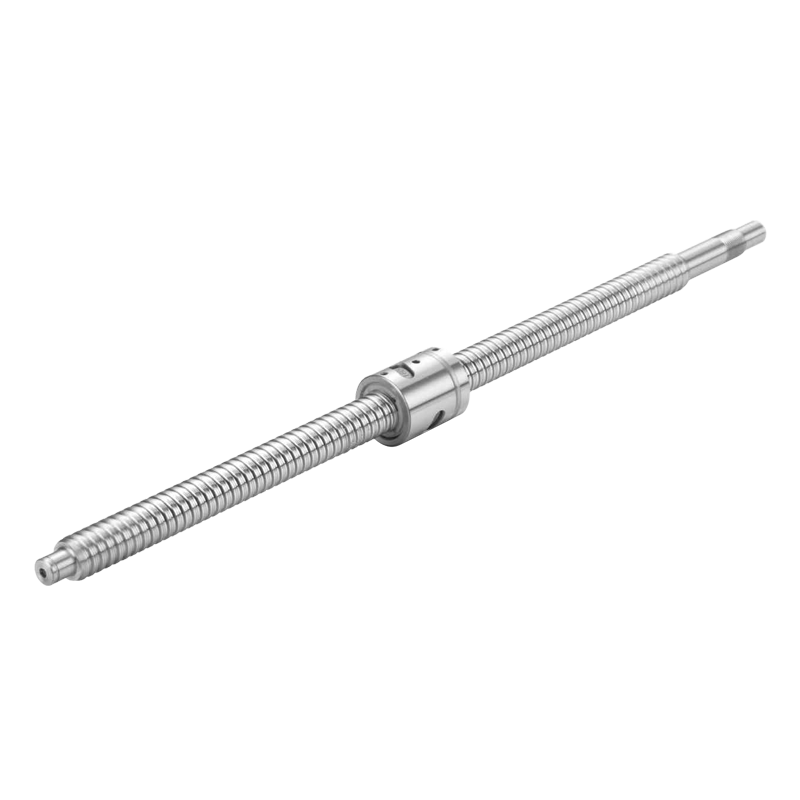
A ball screw converts rotational motion into linear motion with very low friction and high positioning accuracy. That accuracy is only achievable when every component in the system, the screw shaft, the nut, the support bearings, and the mounting structure, is installed within tight tolerances. When any element deviates from its intended alignment or preload, the error does not stay isolated. It propagates through the system.
What happens when installation tolerances are not maintained:
- Misalignment between the screw shaft and nut creates uneven loading on the ball bearings inside the nut
- That uneven loading increases contact stress on certain balls, accelerating wear on those specific points
- As those points wear, backlash increases and positioning repeatability degrades
- The system may still move, but it no longer moves with the precision it was specified to deliver
This degradation is often gradual, which is part of what makes installation errors difficult to attribute correctly. The machine ran acceptably for months before the problem became undeniable, and by that point the installation records have long been set aside.
Mistake One: Misalignment Between Screw Shaft and Mounting Structure
How Does Shaft Misalignment Develop During Installation?
Misalignment is a common installation issue in Industrial Ball Screw applications and can occur in several ways during assembly. The screw shaft should remain parallel to the linear guide or motion axis it supports. Even a slight angular deviation can create side loads on the nut, placing stress on components beyond their intended operating conditions.
Sources of misalignment that are frequently overlooked:
- Mounting surfaces that are not coplanar, where one end of the screw sits slightly higher or at a different angle than the other
- Bearing housings that have been machined or drilled without adequate positional accuracy
- Shimming errors during installation that correct one axis while introducing offset in another
- Thermal distortion of the machine bed or mounting structure that shifts dimensions after initial alignment is confirmed
The detection issue is that misalignment often feels acceptable during a hand-rotation check before the system is loaded. Under load, the side forces become significant and wear accelerates in ways that a no-load check cannot predict.
Correction requires careful use of alignment tools before any fasteners are fully torqued, checking the shaft runout at multiple points along its length, and confirming that the bearing housings are concentric with the shaft centerline before the nut assembly is installed.
Mistake Two: Incorrect Preload Adjustment
What Is Preload and Why Does Getting It Wrong Matter?
Preload is the internal axial force applied within the ball nut assembly to eliminate backlash and improve rigidity. Too little preload and the system has unwanted play, which translates to positioning error. Too much preload and friction increases sharply, heat generation rises, and the ball elements wear faster than they should.
Setting the preload incorrectly during installation is a common issue, as the appropriate adjustment is not always easy to judge through manual feel or basic functional checks.
Signs of insufficient preload:
- Measurable backlash when direction of travel is reversed
- Reduced stiffness when the axis is loaded perpendicular to the travel direction
- Inconsistent positioning that worsens as the system warms up
Signs of excessive preload:
- Elevated operating temperature, particularly at the nut housing
- Higher than expected drive torque, which burdens the motor
- Earlier signs of wear on recirculating balls during operation
Preload adjustment depends on the specific ball screw type being installed. Double-nut configurations adjust preload differently than offset ball configurations, and the torque specifications for locking elements vary by design. Following the supplier's specification for the specific assembly rather than applying a generic approach is the practical safeguard here.
Mistake Three: Improper Bearing Installation and Support
How Do Bearing Errors Affect Screw Performance?
The end support bearings carry the axial and radial loads that the screw generates during operation. If these bearings are installed incorrectly, or if the wrong bearing type is used for the end condition being implemented, the screw system will not perform correctly regardless of how well the shaft alignment was managed.
Common bearing installation errors:
- Using fixed-fixed end support when the screw length and thermal expansion conditions call for fixed-floating
- Installing angular contact bearings in the wrong orientation relative to the applied axial load direction
- Insufficient bearing preload at the fixed end, allowing the shaft to shift axially under load
- Over-tightening lock nuts that secure bearings, inducing thermal distortion in the bearing races
- Using radial bearings where axial load capacity is specifically required
The fixed-floating vs fixed-fixed selection deserves particular attention. A screw that expands thermally during operation needs room to expand without buckling. A fixed-fixed installation that does not account for thermal growth will develop increasing compressive stress in the shaft as the system warms up, eventually causing vibration or periodic binding.
Mistake Four: Contamination During Assembly
Why Does Contamination Have Such an Outsized Effect on Ball Screw Life?
Ball screws rely on smooth, consistent rolling contact between precisely sized steel balls and ground raceway surfaces. The contact areas are small, the surface finish is fine, and the rolling elements cycle continuously through the nut recirculation path. Any contamination in that path creates damage that compounds with every cycle.
Contamination that enters during installation is particularly damaging because it is present from the beginning of the component's service life, accelerating wear before the system ever reaches its intended operating condition.
Sources of contamination during installation:
- Metal chips or swarf from machining operations that were not thoroughly cleaned from the mounting area before assembly
- Grit or abrasive particles from grinding operations on adjacent components
- Moisture from condensation on cold components entering a warm environment before installation
- Incompatible greases or lubricants mixed during assembly that break down quickly in service
- Dust and particles from the installation environment entering the nut assembly before protective seals are fitted
Prevention requires treating the ball screw assembly with the same handling standards used for precision bearings. Clean the work area, handle the nut assembly carefully, apply only the specified lubricant in the correct quantity, and fit the end seals before the system is exposed to the operational environment.
Mistake Five: Ignoring Ball Screw Dimensions in Mounting Design
How Do Dimensional Mismatches Create Installation Problems?
Ball screw dimensions, including shaft diameter, lead, nut envelope size, and end journal dimensions, directly determine how the screw interfaces with its mounting structure. When the mounting design does not account for these dimensions accurately, interference, clearance gaps, or tolerance stackups at assembly create conditions for misalignment, binding, or inadequate support.
Dimensional errors that cause installation problems:
- Bearing housing bore diameters that are machined slightly oversize, allowing the bearing outer ring to move under load
- End journal fits that are too loose, introducing radial play at the screw support point
- Insufficient clearance around the nut housing for thermal expansion during operation
- Mounting holes that are positioned based on nominal dimensions without accounting for cumulative tolerance effects
Verifying ball screw dimensions against the actual machined mounting features before assembly, rather than trusting that nominal dimensions on both sides will result in an acceptable fit, prevents the majority of dimensional mismatch problems. Checking the fit of each bearing in its housing, confirming journal fit with gauges, and verifying that the nut travels freely throughout its full stroke before the system is closed up are all steps that add time but prevent significantly more time in rework.
How Ball Screw Types Change Installation Requirements
Different configurations within the ball screw category carry different installation sensitivities. Understanding this is important because an installation procedure developed for one type does not transfer cleanly to another.
High Speed Ball Screw Systems Demand Dynamic Balance
High Speed Ball Screw systems operate at substantially higher rotational velocities than standard screws. At elevated speeds, any imbalance in the rotating assembly, the screw shaft, support journals, or even the nut in certain configurations, creates vibration that disrupts positioning accuracy and increases bearing wear.
For high speed applications:
- Shaft straightness is more critical because even small deflections become significant at high rotational speeds
- Support bearing selection and preload must account for the dynamic loading at operating speed, not just static conditions
- The critical speed of the screw must be evaluated against the intended operating range before the system is finalized
- Coupling alignment between the drive motor and the screw shaft requires finer tolerances than lower-speed installations
Heavy Duty Ball Screw Installation Prioritizes Load Path Alignment
An Industrial Ball Screw or Heavy Duty Ball Screw used in high-load applications carries forces that would not appear in lighter-duty systems. The mounting structure, the bearing housings, and the connection between the nut and the driven carriage all need to be designed and installed to handle these forces without deflecting in ways that introduce misalignment under load.
Heavy duty installation considerations:
- Mounting surfaces need sufficient stiffness to resist deflection under the applied load without shifting the screw alignment
- Fastener torque at all mounting points must be adequate to prevent any movement under repeated loading
- The nut-to-carriage connection must be designed to transfer load without introducing bending moments into the nut assembly
- Wear and deformation of mounting surfaces under sustained load should be anticipated in the maintenance schedule
Stainless Steel Ball Screw Handling During Installation
Stainless steel ball screw systems are often specified for corrosive or cleanroom environments. The material properties of stainless steel introduce some specific handling considerations during installation.
- Stainless steel is more prone to galling at threaded connections under torque without appropriate anti-galling thread compounds
- The thermal expansion coefficient of stainless steel differs from carbon steel, which affects the calculation of thermal growth allowance in the mounting design
- Cleaning solvents used during installation must be compatible with stainless steel to avoid surface contamination that could affect corrosion resistance
Lead Screw and Ball Screw Installation Differences
Engineers transitioning from conventional threaded screw drives to ball screw systems may continue using installation practices that are not suitable for the new mechanism.
Key installation differences between conventional threaded screw drives and ball screw systems:
| Installation Factor | Lead Screw | Ball Screw |
|---|---|---|
| Alignment Sensitivity | Moderate | High |
| Preload Requirement | Generally none required | Required for accuracy and rigidity |
| Lubrication Type | Often self-lubricating | Requires specific grease or lubrication system |
| Contamination Sensitivity | Lower | Higher |
| End Support Bearing Type | Often simple radial bearings | Requires angular contact bearings |
| Thermal Expansion Handling | Less critical | Must be carefully designed and compensated |
| Back-Driving Behavior | Typically self-locking | Will back-drive without a brake mechanism |
The difference in back-driving behavior requires attention during installation and commissioning. In a vertical axis setup using a ball screw system, the carriage may move downward under gravity if motor power is lost, unless a brake or counterbalance is included. An installation that does not consider this condition can allow the load to drop during an initial power interruption.
Consequences of Getting Installation Wrong
The consequences of installation errors are not always immediately obvious, which is part of what makes them problematic. A system that appears to work acceptably at commissioning may be accumulating wear at an accelerated rate internally.
Progressive consequences of unaddressed installation errors:
- Increased positioning error that grows over time as wear accumulates
- Elevated operating temperature that shortens lubricant life and accelerates further wear
- Vibration that worsens as component wear loosens the system
- Unexpected audible noise from ball recirculation as raceway surfaces develop irregular wear patterns
- Sudden failure once wear has progressed to the point where the ball circuit can no longer function smoothly
By the time these symptoms are unmistakable, the cost of remediation typically exceeds the cost of the original careful installation by a significant margin.
Practices for a Correct Installation Process
A structured installation approach reduces the risk of the common errors covered above. The sequence matters as much as the individual steps.
Pre-installation preparation:
- Clean all mounting surfaces thoroughly and inspect for burrs, chips, or surface damage before any components are brought near
- Verify actual machined dimensions against the ball screw assembly dimensions and check all fits before assembly begins
- Confirm the correct lubricant type and quantity for the specific assembly
- Review the end support bearing configuration and confirm it matches the intended mounting condition
During installation:
- Install and align end bearing housings before the screw shaft is introduced
- Insert the screw shaft carefully through the nut assembly, avoiding contact between the shaft and the nut housing bore
- Align the shaft at both ends before tightening any fasteners to final torque
- Set preload according to the supplier specification and verify with the specified torque check or drag torque measurement
- Cycle the system through its full stroke under no load to confirm smooth, consistent motion before connecting to the drive
Post-installation verification:
- Check operating temperature after the system has run for a short period under representative conditions
- Verify positioning accuracy using appropriate measurement methods
- Check for any audible noise that might indicate contamination or misalignment
- Document the installation configuration for future maintenance reference
Choosing a Ball Screw Supplier Who Supports Installation
Technical documentation quality and supplier support availability matter more in ball screw procurement than in many other component categories, precisely because installation errors are so common and so consequential. A supplier whose technical resources are limited leaves the installing engineer without the specific guidance needed for that assembly. Lishui Wangong Precision Machinery Co., Ltd. manufactures ball screw assemblies across a range of configurations, including standard Industrial Ball Screw systems, high speed variants, heavy duty options, and custom ball screw solutions for specific application requirements. Their engineering team can provide technical documentation covering installation requirements for specific product configurations, guidance on end support bearing selection, and support for engineers working through alignment or preload adjustment questions during commissioning. For buyers evaluating suppliers or working through the technical requirements of a specific application, reaching out with the details of your screw configuration and operating conditions gives their team the context needed to provide relevant and application-specific support rather than generic installation information.
keep
in touch.
in touch.
-

Address: No.186 Xianglong Road, Lishui City, 323000 Zhejiang, China
-

E-Mail: lydia@wangong.net
-

Tel: +86-13666550158
Copyright © 2026 Lishui Wangong Precision Machinery Co., Ltd.

Ball Screw Manufacturer