 English
 Português
 русский
 Español
News ·
News ·
News ·
News ·
News ·
News ·
News ·
News ·
News ·
News ·
News ·
News ·
News ·
News ·
News ·
News ·

About us
Our team is proud to offer on time guarantee and product guarantee to customer satisfaction.
Read Morecontact info
- No.186 Xianglong Road, Lishui City, 323000 Zhejiang, China
- +86-13666550158
- lydia@wangong.net
Posted by Wangong
Ball Screw Types and Their Impact on Load Capacity
A CNC axis begins to bind during heavier cutting operations. A robot arm starts losing positioning accuracy as the payload increases. Sound familiar? These issues often come from underlying factors that are easy to overlook during initial troubleshooting. Ball Screw Types differ a lot more than a quick look at diameter would suggest, and figuring out why some structures handle load so much better than others can save you an entire redesign cycle down the road. If you've been chasing a load capacity issue that seems to defy your original math, the answer is often buried in the internal structure — not just the numbers printed on the spec sheet.
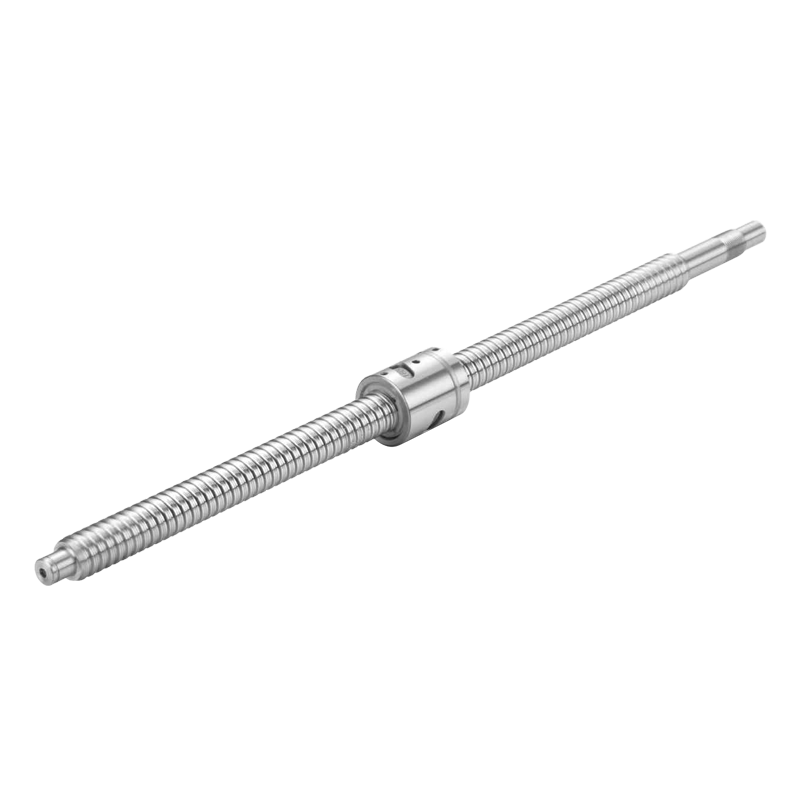
What Actually Determines Ball Screw Load Capacity?
Load capacity doesn't come from one magic number. It emerges from several factors pulling together, and missing even one tends to throw the whole calculation sideways.
The main contributors:
- Screw diameter, since a thicker shaft resists bending and torsional stress
- Ball diameter, where larger balls spread contact stress across a wider area
- Number of load-carrying balls engaged within the nut at any given moment
- Preload, which removes internal clearance and tightens rigidity under shifting loads
- Material composition and heat treatment, which shape fatigue resistance over repeated cycles
None of this works in isolation, either. A screw with a generous diameter but sloppy preload configuration can genuinely underperform a smaller unit built with tighter internal tolerances. It's honestly one of the more common mistakes buyers make — assuming bigger automatically means stronger, when internal geometry carries just as much weight in the outcome.
Why Does Preload Matter So Much?
Preload applies a controlled internal force between the balls and the raceway, closing the small gap that would otherwise let the nut shift under load. Skip adequate preload and a ball screw develops backlash — and backlash translates straight into positioning drift and uneven load distribution across the balls.
Too much preload swings the other way, though: added friction, faster wear, dropped efficiency. Striking that balance means matching preload to the actual application rather than defaulting to whatever setting worked on the last project.
Different Ball Screw Types and How They Handle Load
Structural design varies a fair bit across this category, and each approach spreads load differently.
Internal Circulation Versus External Circulation
Internal circulation designs route balls back through a channel built directly into the nut body, keeping the whole assembly tight and compact. Works well where space is at a premium. That said, internal circulation sometimes carries a slightly lower load ceiling than external alternatives, simply because the channel geometry caps how many balls can engage at once.
External circulation, on the other hand, routes balls through a tube mounted outside the nut. That external path allows a higher ball count — generally stronger load handling — though the assembly takes up more physical room.
Neither wins across the board. Compact machinery tends to favor internal circulation for its smaller footprint. Heavy industrial gear leans toward external circulation when raw capacity outranks size on the priority list.
What a Double Nut Structure Actually Buys You
Single nut designs handle plenty of applications just fine. But double nut configurations bring something meaningful once rigidity and preload stability start mattering more than convenience. Two nuts working against each other with a controlled preload between them resist backlash far more effectively than a single nut ever could alone.
You'll see this structure show up constantly in equipment demanding both heavy load and positioning precision at once — CNC machining centers, for instance, where tool pressure shifts constantly and any backlash shows up directly in the finished part.
What Sets a Heavy Duty Ball Screw Apart?
A heavy duty ball screw usually stacks several reinforcing elements together rather than leaning on just one design trick. Thicker shaft, higher ball count, reinforced nut housing, sometimes specialized raceway geometry — all working in concert to push the load ceiling well past what a standard configuration can sustain.
These units turn up in:
- Injection molding machines, where clamping force demands steady, heavy load handling
- Industrial robots hauling substantial payloads through repeated motion cycles
- Heavy automation equipment where downtime from early wear carries real cost
- Press and stamping lines subjected to sudden, high magnitude force
Going heavy duty makes sense once your application's load demands start pushing against, or past, what standard Ball Screw Types can reliably handle over a normal service life.
Ball Screw Dimensions and Their Relationship to Load Capacity
Dimensional choices shape load capacity directly, and building an intuition for this relationship pays off during initial equipment specification.
| Dimensional Factor | Effect on Load Capacity | Practical Consideration |
|---|---|---|
| Shaft Diameter | Larger diameter increases bending resistance | Balance against space and weight constraints |
| Lead (Pitch) | Shorter lever arms can improve load handling at reduced speeds | Tradeoff against linear speed requirements |
| Ball Diameter | Larger balls spread contact stress more broadly | Affects overall nut size and assembly footprint |
| Nut Length | Longer nut engages more balls simultaneously | Improves load rating but adds physical length |
| Screw Length | Longer unsupported spans reduce effective load capacity | May require additional support bearings |
Reading through this table against your actual application constraints clarifies where the unavoidable tradeoffs sit. A shorter pitch can increase load capacity, but it also reduces linear travel speed for the same rotational input, so the suitable choice depends on which factor matters more for your equipment.
Does Screw Length Really Cut Into Load Capacity?
It does, and this gets overlooked more than it should. Longer unsupported spans are more prone to bending or whipping under load, especially at higher rotational speeds. That's exactly why longer axes often need additional support bearings positioned along the shaft rather than relying purely on end mounting to carry the whole load.
Balancing High Speed Operation With Load Capacity
Can you actually get both high speed and strong load handling from the same screw? Partially — though some compromise usually creeps in somewhere. Higher rotational speeds generate more heat and centrifugal stress on the balls, which limits how much extra load the assembly can absorb without accelerating wear.
Applications chasing both speed and capacity at once tend to lean on:
- Larger diameter shafts that dissipate heat and resist deflection better at speed
- Optimized circulation paths that cut friction losses during rapid cycling
- Precision-grade materials with better fatigue resistance under combined thermal and mechanical stress
Achieving this balance usually requires accepting a compromise in one area or another, rather than expecting one configuration to deliver both benefits without any tradeoffs.
When Does a Custom Ball Screw Make Sense?
Standard product lines cover a wide swath of industrial work, but not every project fits neatly into a catalog listing. A custom ball screw starts making sense when:
- Standard diameter, lead, or length combinations don't match your mounting or load requirements
- Unusual environmental conditions — high heat, corrosive exposure — call for specialized materials
- Space constraints demand a non standard nut housing or mounting configuration
- Production volume justifies the engineering investment a tailored load rating requires
Custom builds generally involve longer production timelines and added engineering costs, so standard industrial ball screw options should be considered before moving to a custom solution. Still, using a standard component outside its intended application can create higher costs over the equipment's service life than choosing the right specification from the start.
Comparing Ball Screw and Lead Screw for Load Applications
Worth a quick detour here, since this comparison comes up constantly during early equipment planning. Lead screws rely on sliding friction between screw and nut. Ball screws use rolling contact through the ball bearings instead, cutting friction considerably and improving efficiency under load.
For applications requiring increased load capacity, precision, and extended service life, ball screws generally provide stronger performance compared with traditional screw alternatives. Lead screws still earn their place in lower cost, lower precision work where load demands stay modest — but anyone dealing with heavier loads or tighter positioning tolerances usually lands on ball screw configurations as the more dependable long term pick.
Choosing the Right Structure for Your Application
Pulling all of this together into something usable comes down to a handful of grounded steps:
- Calculate the actual load your application places on the screw, covering both static and dynamic conditions
- Decide whether space constraints favor internal circulation, or whether external circulation's higher capacity justifies the added footprint
- Weigh whether single nut or double nut configuration better fits your rigidity and backlash tolerance needs
- Check whether standard industrial ball screw dimensions cover your needs, or whether a custom specification is genuinely warranted
- Factor speed requirements in alongside load demands, keeping the tradeoffs of optimizing for both in mind
Working through this sequence carefully tends to head off the kind of mismatch that shows up months later as premature wear, positioning drift, or a mechanical failure under load conditions the original spec never quite accounted for.
Understanding how different Ball Screw Types handle load capacity gives engineers a considerably stronger footing for equipment specification, rather than treating diameter as a rough stand-in for strength. Internal structure, circulation design, nut configuration, and dimensional choices all interact in ways that shape real world performance far more than any single headline number could on its own, and catching those relationships early tends to prevent costly redesigns once equipment is already running in the field. Lishui Wangong Precision Machinery Co., Ltd. works with engineers and OEM teams navigating exactly these load capacity decisions, helping match ball screw structure and dimensions to real operating conditions instead of generic assumptions pulled straight from a catalog. If your current setup is pushing against the limits of a standard configuration, reaching out to talk through your specific load and precision requirements is a solid next step toward something more reliable long term.
keep
in touch.
in touch.
-

Address: No.186 Xianglong Road, Lishui City, 323000 Zhejiang, China
-

E-Mail: lydia@wangong.net
-

Tel: +86-13666550158
Copyright © 2026 Lishui Wangong Precision Machinery Co., Ltd.

Ball Screw Manufacturer