 English
 Português
 русский
 Español
News ·
News ·
News ·
News ·
News ·
News ·
News ·
News ·
News ·
News ·
News ·
News ·
News ·
News ·
News ·
News ·

About us
Our team is proud to offer on time guarantee and product guarantee to customer satisfaction.
Read Morecontact info
- No.186 Xianglong Road, Lishui City, 323000 Zhejiang, China
- +86-13666550158
- lydia@wangong.net
Posted by Wangong
Why Ball Screws Replace Lead Screws in Precision Systems
Your motion system is losing positioning accuracy mid-run. The actuator is running hotter than it should. Maintenance intervals are creeping shorter, and the engineering team keeps flagging the same component. If any of that sounds familiar, the issue may not be the machine design — it may be the transmission element at its center. Understanding the range of Ball Screw Types available, and why they have displaced traditional screw drives across many precision applications, is a practical starting point for anyone evaluating a motion system redesign or new equipment specification.
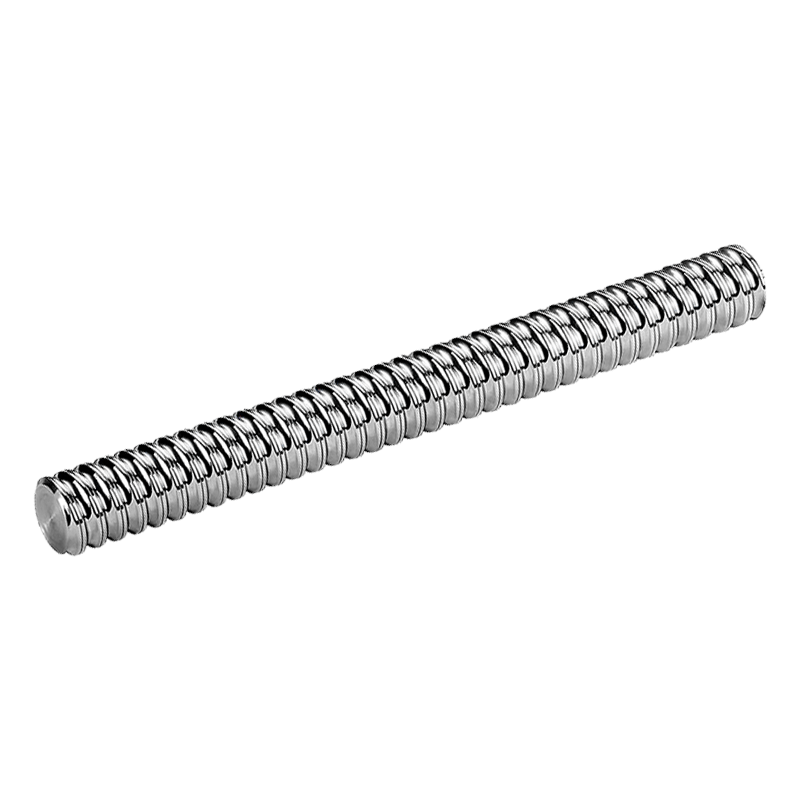
The shift from sliding-contact screws to recirculating ball screw systems is not a recent development, but the pace of adoption has accelerated as automation demands have increased. Engineers who once accepted the limitations of those screws as unavoidable are now working in industries where those limitations translate directly into rejected parts, downtime costs, and uncompetitive cycle times. The technical case for ball screws is grounded in physics — and the application case has been made repeatedly across CNC machining, industrial robotics, semiconductor handling, and medical device manufacturing.
The Core Difference: Sliding Friction Versus Rolling Contact
How Lead Screws and Ball Screws Actually Work
A traditional screw drive transmits motion through direct contact between a threaded shaft and a matching nut. When the shaft rotates, the nut moves along the axis — but the surfaces are in sliding contact throughout that motion. Friction is inherent to the design. That friction is not a defect; it is the mechanism.
A ball screw works differently. Steel balls circulate in a channel between the screw shaft and the nut, converting rotation into linear movement through rolling contact rather than sliding. The difference in friction coefficient between these two contact modes is significant, and it cascades into nearly every performance characteristic that matters in a precision system.
What Changes When Rolling Replaces Sliding?
The practical effects are not subtle:
- Transmission efficiency rises. Lead screws lose a large portion of input energy to heat generated by sliding friction. Ball screws retain far more of that input as useful linear motion.
- Operating temperature drops. Less friction means less heat generated per cycle. In high-duty systems, this is not a minor detail — thermal expansion affects dimensional accuracy, and heat buildup can shorten component life considerably.
- Backdriveability changes. Lead screws are generally self-locking under load, which is useful in some vertical applications. Ball screws are backdriveable, which makes them responsive to servo control but may require a brake in vertical configurations.
- Wear rate decreases. Rolling contact distributes stress across multiple contact points rather than concentrating it on a sliding interface. The resulting wear rate is substantially lower, which extends service life.
The Lead Screw and Ball Screw Difference, at its foundation, is a friction problem. Everything downstream of that — efficiency, accuracy, speed capability, thermal behavior, service life — follows from how each design handles that friction.
Precision and Repeatability: Where the Gap Widens
Why Positioning Accuracy Depends on More Than Machining Tolerance
A motion system's positioning accuracy reflects several compounding factors: the mechanical precision of the screw and nut, the stiffness of the system under load, the backlash in the drive train, and the thermal stability of the assembly during operation.
Lead screws accumulate backlash as they wear. The sliding interface that produces friction also produces dimensional change over time, and that change shows up as positioning error. In applications where the load reverses direction frequently — as it does in many CNC and robotic applications — backlash error compounds.
Ball screws address this through preloading. By applying a controlled internal preload to the ball circuit, manufacturers can eliminate effective backlash without creating excessive friction. The result is a system that maintains repeatable positioning even under directional reversal, which is why Industrial Ball Screw configurations are standard in applications where part-to-part consistency is measured in microns.
Does Preload Affect Service Life?
Preload is not free — it does add internal stress to the ball circuit, which affects fatigue life. The relationship between preload level and service life is well understood, and selecting the appropriate preload for a given load and duty cycle is a core part of ball screw specification. Too little preload and backlash returns; too much and fatigue life shortens unnecessarily.
A Ball Screw Company with engineering support capability will typically assist customers in calculating the appropriate preload class for their application. For Custom Ball Screw projects with unusual load profiles or duty cycles, this calculation becomes particularly important.
Ball Screw Types and Their Specific Applications
Not All Ball Screws Are Built for the Same Job
The broad category of ball screws contains meaningful variation in design intent. Selecting the right configuration requires understanding what each variant is engineered to handle.
Standard precision ground ball screws are manufactured to tight dimensional tolerances and are used across general CNC, automation, and instrumentation applications. The ground thread profile produces high geometric accuracy and is well-suited to applications requiring consistent positioning over long service lives.
High Speed Ball Screw configurations are designed to operate at elevated rotational speeds without the dynamic instability — resonance, vibration, thermal runaway — that affects conventional designs at high RPM. The shaft design, ball circuit geometry, and end support requirements all differ from standard configurations. Applications include high-throughput machining centers, fast-traverse linear axes, and automated assembly equipment with demanding cycle time targets.
Heavy Duty Ball Screw variants prioritize load capacity and fatigue resistance over speed. Larger ball diameters, higher load ratings, and more robust nut designs allow these to handle the forces present in press applications, large-format CNC machines, and heavy industrial automation. The trade-off is typically a larger physical envelope and sometimes lower speed capability.
Rolled ball screws offer cost efficiency for applications where the tight tolerances of ground screws are not required. The manufacturing process is faster and less expensive, making rolled variants practical for general industrial use where positioning requirements are moderate.
How Do Ball Screw Types Map to Industry Applications?
The selection logic follows the application requirements fairly directly:
| Application Type | Primary Requirement | Relevant Ball Screw Configuration |
|---|---|---|
| CNC machining centers | Positioning accuracy, repeatability | Precision ground, appropriate preload |
| High-speed automation lines | Cycle time, dynamic stability | High Speed Ball Screw |
| Industrial presses and heavy fixtures | Load capacity, fatigue life | Heavy Duty Ball Screw |
| Medical and semiconductor equipment | Cleanliness, precision, low particle generation | Ground screws with specific lubrication |
| General industrial automation | Cost efficiency, adequate accuracy | Rolled ball screws |
| Custom motion systems | Variable; application-specific | Custom Ball Screw, engineered to spec |
Reading across that mapping, the pattern is that ball screw selection is not a single decision but a set of tradeoffs between accuracy, speed, load, cost, and physical constraints.
Why High-Speed Performance Favors Ball Screws
What Limits Lead Screws at Elevated Speeds?
A screw drive running at high rotational speed generates friction heat at the sliding interface. As speed increases, so does heat generation. That heat causes thermal expansion — of the screw shaft, of the nut, and of the surrounding mechanical structure. Dimensional changes from thermal expansion translate into positioning drift, which is precisely the outcome that precision systems cannot tolerate.
There is also a mechanical wear dimension. High sliding speeds accelerate surface wear at the thread interface, shortening the effective service life and increasing the frequency of replacement. In production environments, unplanned maintenance creates costs that extend well beyond the replacement part itself.
How Does a High Speed Ball Screw Handle This Differently?
Rolling contact generates far less heat per unit of distance traveled than sliding contact. At elevated speeds, this difference becomes increasingly significant. A High Speed Ball Screw maintains thermal stability across a broader operating range, which preserves positioning accuracy through sustained high-duty cycles.
Design features that support high-speed operation include:
- Modified ball circuit geometry to reduce ball-to-ball interference at high velocities.
- Shaft deflection management through careful end support and bearing selection.
- Lubrication systems matched to the thermal and speed requirements of the application.
- Balanced screw shaft design to reduce vibration at resonant speeds.
For machine builders designing equipment around fast traverse rates and high cycle counts, the step from conventional to high-speed ball screw design is not optional — it is what makes the performance specification achievable.
Heavy Duty Applications and Load Capacity Considerations
Where Standard Configurations Fall Short
A standard ball screw is not designed to absorb large axial forces across millions of cycles. When applied outside its load envelope, fatigue failure at the ball-raceway contact becomes the limiting factor. Heavy Duty Ball Screw variants address this by using larger contact geometry, higher-capacity ball circuits, and more robust nut housings.
Industries that routinely demand these heavier configurations include:
- Large-format machining, where cutting forces are substantial and the screw must maintain position under significant axial loading.
- Press and stamping applications, where the screw carries the full press load in addition to positioning the slide.
- Warehousing and material handling automation, where heavy payloads are moved across long strokes repeatedly.
- Construction and industrial equipment with powered linear axes, where the operational environment is demanding and component replacement is costly.
Is a Custom Ball Screw the Right Answer for Non-Standard Loads?
Standard catalog configurations cover many applications, but some systems fall outside the standard envelope — unusual stroke lengths, combined loading conditions, environmental constraints, or integration requirements that standard nut designs cannot accommodate. A Custom Ball Screw, engineered to the specific load profile and dimensional requirements of the application, addresses this gap.
Custom Ball Screw projects typically involve closer collaboration between the buyer's engineering team and the manufacturer's application engineers. Lead time is longer than standard product, and the engineering investment is higher. For applications where a standard product genuinely cannot meet the requirement, the custom route delivers a solution that catalog shopping cannot.
Evaluating the Cost Case for Upgrading
Is the Higher Acquisition Cost Justified?
Ball screws have a higher purchase cost than traditional screw drives. The question worth asking is not whether the acquisition cost is higher — it clearly is — but whether the total cost over the operating life of the system favors one option over the other.
Factors that affect total cost over service life:
- Replacement frequency. A traditional screw drive in a demanding application may require replacement more often than a ball screw in the same role. Each replacement involves not just the part cost but the downtime, labor, and production impact of the maintenance event.
- Energy consumption. The efficiency difference between sliding and rolling contact accumulates across every operating hour. In energy-intensive production environments, this difference contributes meaningfully to operating cost.
- Accuracy maintenance. As a traditional screw drive wears, positioning accuracy degrades. Compensating for this degradation — through software corrections, increased inspection frequency, or reduced cycle speeds — carries costs that are often invisible in a simple acquisition cost comparison.
- Production quality impact. In applications where screw performance directly affects part quality, a more accurate and consistent drive element reduces scrap and rework. Quantifying this impact in cost terms requires application-specific analysis, but the direction is consistent.
The cost case for ball screws strengthens as application demands increase. In high-duty, high-precision, or high-speed contexts, the economics typically favor the higher-acquisition-cost option when total ownership cost is the measurement.
Selecting a Ball Screw Company and Getting the Specification Right
What to Look for Beyond Product Catalog Range
The ball screw market includes a wide range of suppliers — from distributors of standard catalog product to manufacturers with full engineering and custom production capability. The right source depends on what the application actually requires.
For standard configurations where catalog specifications match the application, availability and pricing are the primary selection factors. For applications requiring custom solutions, engineering support capability, production flexibility, and the ability to document and certify custom specifications become more important than catalog breadth.
Useful questions to ask when evaluating a Ball Screw Company:
- Does the manufacturer produce ground screws in-house, or source them externally?
- What level of engineering support is available for application specification?
- Can custom configurations be documented with full dimensional and load certification?
- What are the delivery time commitments for standard and custom products?
- Is the quality system documented in a way that supports your procurement requirements?
Getting the specification right before ordering prevents the more expensive problem of discovering mid-installation that the selected product does not meet the application requirement.
For mechanical engineers, machine builders, and procurement teams involved in a motion system specification or upgrade evaluation, the choice between traditional screw drives and ball screw configurations is not solely a question of budget. It is a question of what the application actually demands — in terms of accuracy, speed, load, service life, and thermal behavior — and whether the selected transmission element can deliver that over a realistic operating horizon. The Lead Screw and Ball Screw Difference is grounded in fundamental physics, and the performance gap widens as application demands increase. If your current system is underperforming, or if you are designing a new machine around precision positioning requirements, working through the ball screw type selection with a knowledgeable supplier is a practical next step. Lishui Wangong Precision Machinery Co., Ltd. produces a full range of precision ground and rolled ball screws, including high speed and heavy duty configurations, with engineering support for Custom Ball Screw specifications — contact the team to discuss your application requirements and request a technical consultation.
keep
in touch.
in touch.
-

Address: No.186 Xianglong Road, Lishui City, 323000 Zhejiang, China
-

E-Mail: lydia@wangong.net
-

Tel: +86-13666550158
Copyright © 2026 Lishui Wangong Precision Machinery Co., Ltd.

Ball Screw Manufacturer