 English
 Português
 русский
 Español
News ·
News ·
News ·
News ·
News ·
News ·
News ·
News ·
News ·
News ·
News ·
News ·
News ·
News ·
News ·
News ·

About us
Our team is proud to offer on time guarantee and product guarantee to customer satisfaction.
Read Morecontact info
- No.186 Xianglong Road, Lishui City, 323000 Zhejiang, China
- +86-13666550158
- lydia@wangong.net
Posted by Wangong
Stainless Steel Ball Screw Solutions for Precision Motion Applications
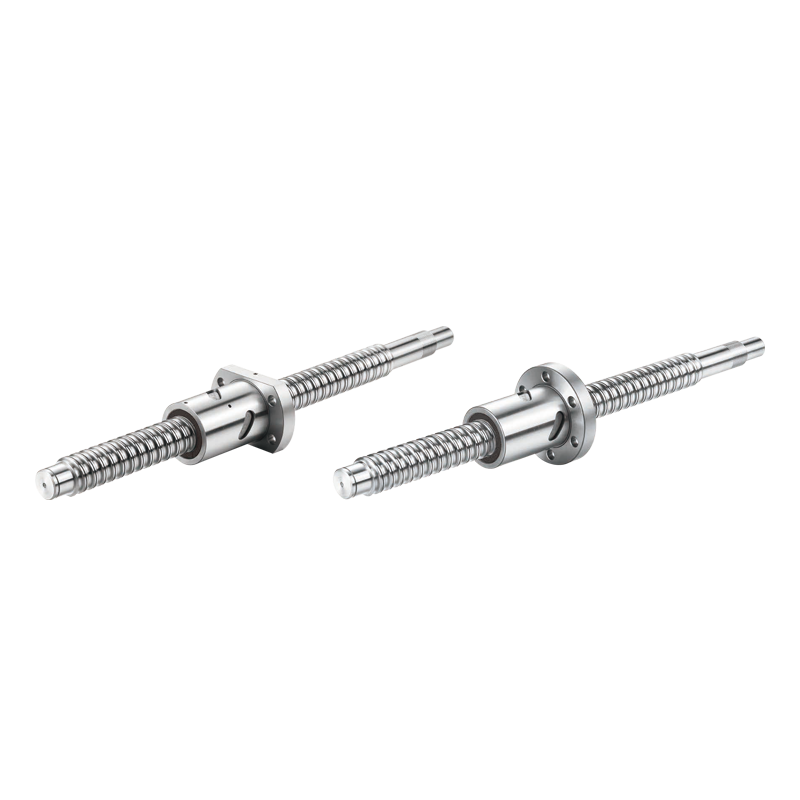
A lab technician calibrating an automated pipetting machine notices the arm moving with a slight hesitation, stopping just a hair off from where it's supposed to land each time. After some troubleshooting, the culprit turns out to be a worn-out linear motion component inside the machine — the part responsible for turning a motor's spinning movement into the precise back-and-forth motion the pipette arm actually needs. Swap that part for a Stainless Steel Ball Screw , and the hesitation disappears. That arm starts landing exactly where it should, run after run. That's really what a ball screw does at its core — it takes rotation and turns it into straight-line movement, doing it smoothly enough that machines can position things with real consistency instead of guessing.
How Does a Ball Screw Actually Work?
A ball screw is built from a threaded shaft, a nut that rides along that shaft, and small rolling balls sitting between the two. As the shaft spins, those balls roll along the threads, carrying the nut along with them in a straight line.
That rolling motion is really the key difference between a ball screw and older sliding-style mechanisms. A traditional slide relies on surfaces rubbing directly against each other, which creates friction and wear over time. A ball screw swaps that sliding contact for rolling contact instead, which tends to move a lot more smoothly and puts less strain on the parts involved.
Building this mechanism out of stainless steel adds another layer of practical benefit. Stainless steel holds up well against moisture, certain chemicals, and general wear, which matters a lot in settings where a regular steel part might start rusting or degrading faster than expected.
Ball screws show up across a genuinely wide mix of equipment — anywhere something needs to move in a straight line with real accuracy, there's a decent chance one of these is doing the actual work behind the scenes.
Why Choose Stainless Steel Specifically for This Job?
Material choice tends to make or break how well a mechanical component actually holds up, and stainless steel brings a few practical advantages to the table for this particular application.
Corrosion resistance is probably the biggest one. In settings where moisture, cleaning chemicals, or humidity are just part of daily operation, stainless steel resists the kind of surface damage that would slowly wear down a less suitable material.
Durability matters just as much. A ball screw moves back and forth constantly during normal use, and a material that can handle that repeated motion without breaking down helps keep the whole system running steadily over time.
There's also the surface itself. Stainless steel stays clean-looking and is fairly easy to wipe down or sanitize, which turns out to matter a lot in settings like medical labs or food production lines, where hygiene isn't just a nice extra — it's a real requirement.
| Stainless Steel Trait | Why It Actually Matters |
|---|---|
| Resists corrosion | Holds up in humid or chemically exposed settings |
| Durable under repeated motion | Keeps performing steadily over years of use |
| Clean, easy-to-maintain surface | Fits environments needing regular sanitation |
| Works across different setups | Adapts to a range of machine designs |
Not every application needs every one of these traits equally. A piece of lab equipment cares a lot about hygiene, while a factory robot arm might care more about raw durability under constant motion.
Where Do These Show Up in Real Equipment?
Precise, controlled movement turns out to be something a surprising number of industries depend on daily, which is part of why ball screws keep turning up in such different settings.
Medical devices
Diagnostic machines and lab automation equipment often depend on smooth, accurate movement — think of an arm dispensing exact amounts of liquid into test tubes, over and over, without drifting off target.
Automated manufacturing
Robotic arms and automated production lines rely on components that can repeat the same motion thousands of times without gradually losing accuracy. A ball screw handles that repetitive job well.
Semiconductor and electronics manufacturing
Building electronic components often involves tiny, careful adjustments during production. Equipment here needs motion control fine enough to handle work at a genuinely small scale.
General industrial machinery
Factory equipment handling repeated manufacturing tasks — stamping, cutting, positioning materials — often relies on ball screws to keep that repeated motion consistent shift after shift.
Laboratory instruments
Research equipment frequently needs careful, repeatable adjustment, and a clean, corrosion-resistant component fits naturally into environments where contamination is a genuine concern.
What Actual Advantages Does This Design Offer?
A ball screw brings a handful of practical benefits that explain why it's stuck around as a go-to solution for motion control.
Smoother movement overall
Because the mechanism relies on rolling rather than sliding contact, machines built around ball screws tend to move with noticeably less friction and jerkiness compared to older sliding designs.
Better handle on positioning
Turning rotational movement into linear motion in a controlled way lets equipment land exactly where it's supposed to, run after run, instead of drifting slightly off target over time.
Holding up across different environments
The material properties of stainless steel let these components handle a wider range of working conditions without needing constant special accommodation.
Less frequent maintenance headaches
A properly matched and cared-for ball screw tends to need less troubleshooting over its working life, though regular inspection still plays a role in keeping things running smoothly.
Reliable performance over the years
Matched correctly to the actual application, a Stainless Steel Ball Screw can keep supporting a motion system reliably for a long stretch of continuous use.
How Should a Company Actually Pick One?
Landing on the right ball screw for a particular piece of equipment comes down to a handful of practical questions.
What environment will it actually operate in?
Cleanliness requirements, exposure to moisture or chemicals, and general usage patterns all shape which specific design makes sense. A component destined for a sterile lab has different priorities than one going into a dusty factory floor.
How does it need to fit the machine's actual structure?
The ball screw has to match the equipment's overall design and movement requirements. A mismatch here tends to cause problems down the line that have nothing to do with the part's inherent quality.
What does the application genuinely require?
Different industries expect different things from a motion system. Getting specific about actual movement needs and operating conditions upfront avoids settling on something that technically works but doesn't really fit.
Who's actually supplying the part?
Working with a supplier who has real experience in this space tends to surface better-suited options than trying to figure it all out from a catalog alone.
What Actually Determines How Well It Performs?
A handful of connected factors shape whether a Stainless Steel Ball Screw ends up performing the way it's supposed to.
Installation quality carries real weight. A component installed carelessly or misaligned with surrounding parts can create issues that have nothing to do with the ball screw itself being poorly made.
Maintenance habits matter over the long run too. Regular inspection, proper cleaning, and general attentiveness help keep the component operating steadily rather than gradually degrading unnoticed.
Operating conditions need to genuinely match what the part was actually built for. Pushing a component well beyond its intended working conditions tends to shorten how long it holds up.
The broader machine design plays a role as well. A ball screw is just one piece of a larger motion system, and how well it performs depends heavily on how well it works together with everything else surrounding it.
Where Does This Fit Into Precision Equipment Today?
Industries keep paying closer attention to how accurately and efficiently their equipment actually operates, and motion components play a real part in meeting that expectation. Stainless Steel Ball Screws continue supporting a wide range of precision applications because they combine genuinely controlled movement with material properties that hold up well across different working conditions. As equipment keeps getting more specialized, manufacturers keep looking for motion solutions that can adapt without sacrificing dependable, everyday performance. The push toward more compact, flexible, and reliable machinery keeps Stainless Steel Ball Screws relevant — quietly doing the job of turning rotation into precise, repeatable movement, the same way that lab technician's pipetting machine now runs without a single hesitation. Understanding their applications, features, and selection factors helps businesses develop more suitable motion systems for different industrial requirements.
keep
in touch.
in touch.
-

Address: No.186 Xianglong Road, Lishui City, 323000 Zhejiang, China
-

E-Mail: lydia@wangong.net
-

Tel: +86-13666550158
Copyright © 2026 Lishui Wangong Precision Machinery Co., Ltd.

Ball Screw Manufacturer